
DripBeds.com
The far end of the bed is dry and the near end is swamped.
Here’s why, and what fixes it.
A drip kit installed by the instructions still leaves some raised beds underwatered. This site exists for the gap between “connect the tubing” and a system that actually waters evenly: PSI ranges, emitter spacing by crop, and run times that change with your soil, not a flat 20 minutes.

Where to Start
Buy it right, install it right, run it right
Those are three separate failure points, not one. A gardener can pick a perfectly good kit and still get uneven watering from a bad layout, or install everything correctly and still get clogging from a schedule that ignores soil type. Each pillar covers one stage in full.
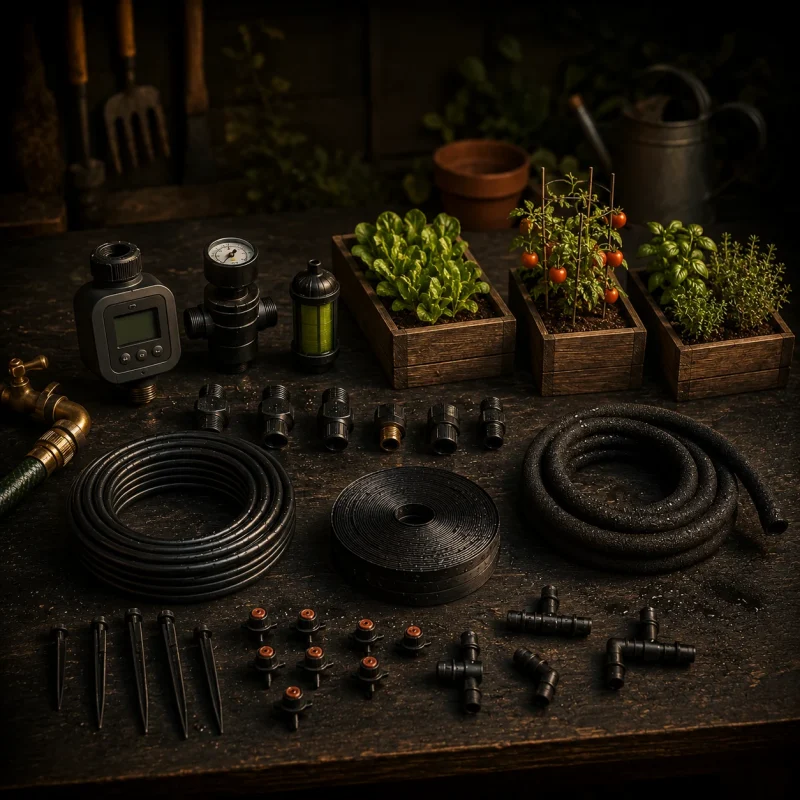
Best Raised Bed Drip Irrigation Kit: How to Choose by Bed Count, Crop, and Water Source
A $35 drip tape kit and a $90 emitter tubing kit can both look fine on the same product page. The difference shows up in week three: which one clogs in hard water, which pressure regulator is actually undersized, and which one was never built for a 4×8 bed in the first place. This pillar walks through drip tape vs soaker hose vs emitter tubing, what the timer actually controls, and how to match a kit to your bed count instead of its star rating.
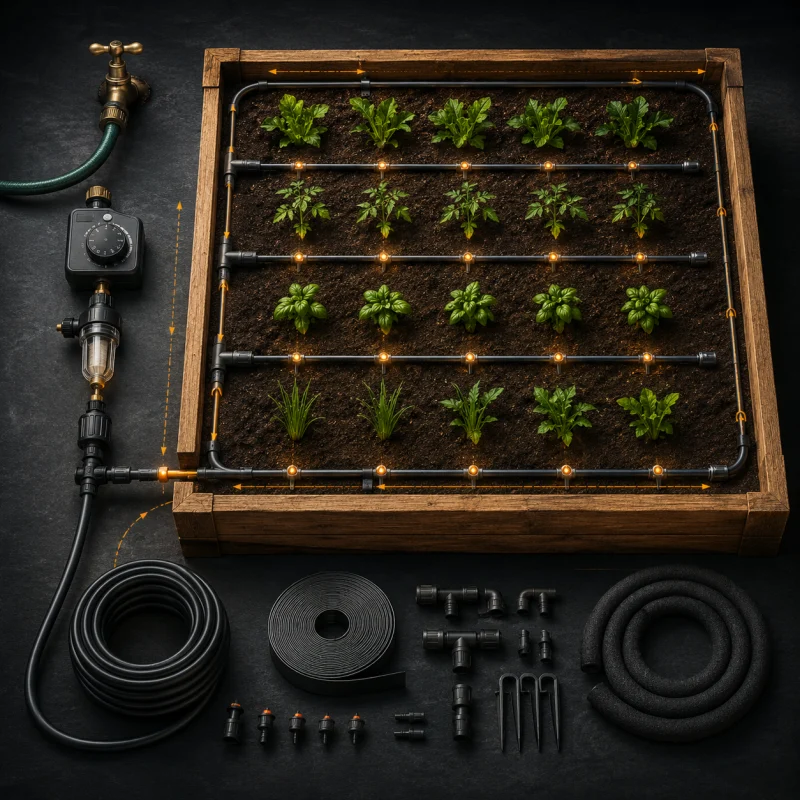
Raised Bed Drip Irrigation Setup: Layout, Components, and Connecting It All Correctly
The most common mistake I see in raised bed installs is running the mainline through the bed instead of around it, then wondering why the soil shifts and the line kinks by midsummer. This pillar covers how many lines a 4-foot-wide bed actually needs, which fittings fail first under real pressure, and how to connect the whole thing to a hose bib without the slow leak that doesn’t show up for three weeks.
Raised Bed Drip Irrigation Schedule: Run Times by Crop, Soil, and Season
A timer set to 20 minutes a day waters a sandy mix and a clay-heavy mix completely differently, and neither one fixes a bed where the near end floods and the far end stays bone dry. This pillar breaks down run times by crop and soil type, what to check when one bed behaves nothing like its neighbor, and the troubleshooting and seasonal maintenance that keep a system working past its first year.

Browse by Topic
Already know what’s bugging you?
Skip the pillars and go straight to the stage you’re stuck on right now.
Buying and Choosing
Still deciding between drip tape and emitter tubing, or trying to figure out which timer was actually built for a raised bed instead of a lawn zone? Start here.
Install and Design
Kit’s in hand, layout isn’t decided yet. Line spacing, component choices, and connecting to your water source without the leak that shows up later.
Operation and Troubleshooting
System’s running but something’s off: clogged emitters, a bed that won’t dry out, or wondering if you need to winterize before the first freeze.