Adding Drip Irrigation to an Already-Planted Raised Bed: How to Retrofit Without Disturbing Roots

Adding Drip Irrigation To Existing Raised Bed

Adding drip irrigation to an existing raised bed is harder once the bed is full of established plants, but it does not require pulling anything out of the ground. The trick is routing the mainline over the top of the frame instead of through the soil, then working the dripline around root zones instead of … Read more
Raised Bed Drip Irrigation With a Far Spigot: How to Run Mainline Across the Yard Without Problems

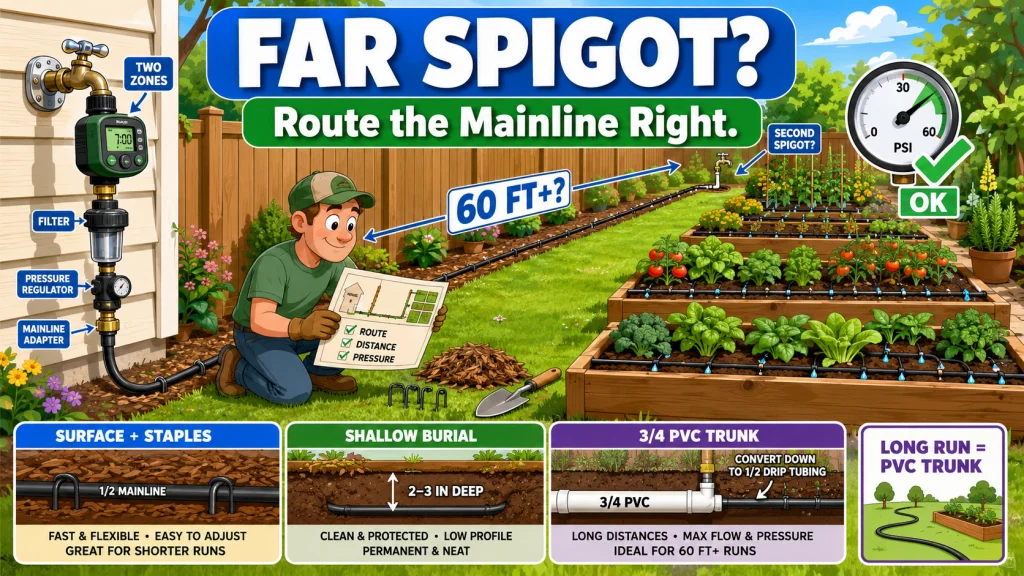
Raised Bed Drip Irrigation Long Run Spigot

When raised beds sit 40, 60, or 100 feet from the nearest outdoor spigot, the drip system looks fine on paper until there are 80 feet of black tubing snaking across a patio that nobody wants to walk past. The routing decision matters as much as the pressure setup and the fittings. This article covers … Read more

Adding Raised Beds to an Existing Drip Irrigation System: How to Extend Without Rebuilding

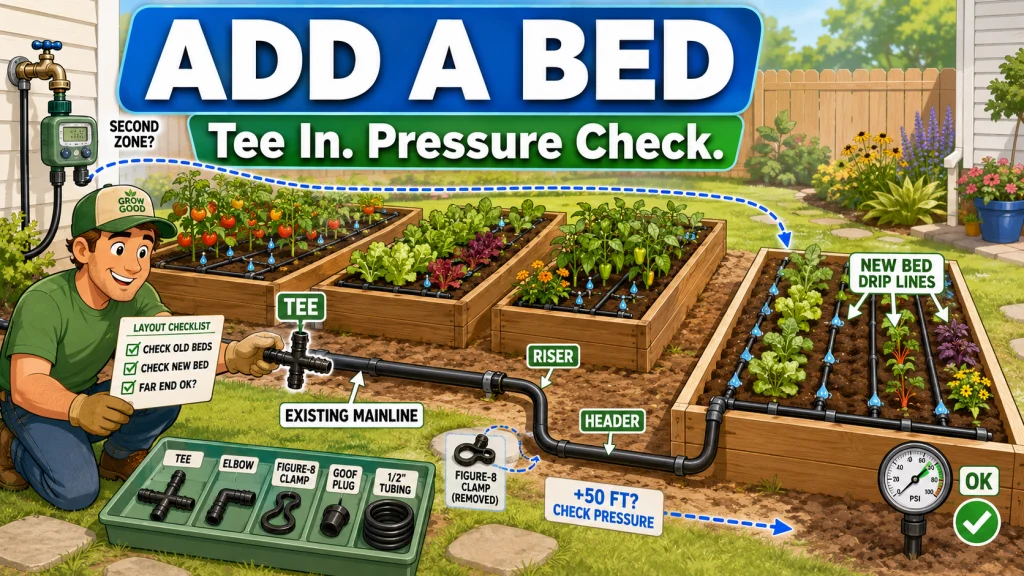
Adding Beds To Existing Drip Irrigation System

Adding a new raised bed to an existing drip system is a one-fitting job in most setups. The mainline is already there, the pressure is already dialed in, and the far end of the line is almost certainly sealed with something removable. The process comes down to opening that endpoint, inserting a barbed tee, and … Read more

Drip Irrigation Mainline Distance for Raised Beds: How Far Can You Run It Before Pressure Drops

Drip Irrigation Mainline Distance Raised Beds

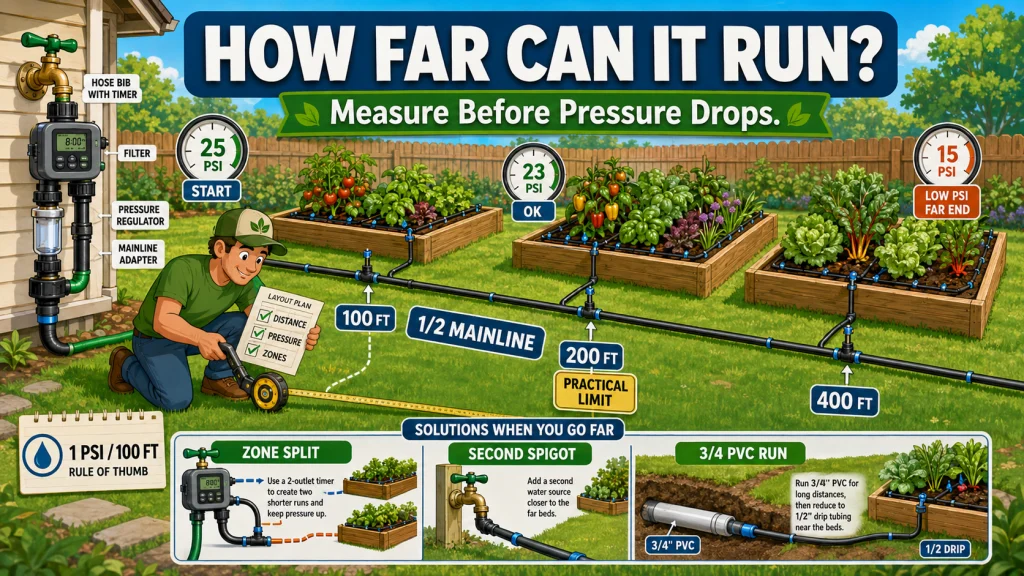
1/2-inch mainline can run about 200 feet from the spigot under most residential pressure conditions before the emitters at the far end start receiving meaningfully less water than the ones near the start. This guide explains why distance causes that drop in the first place, roughly how much pressure you lose per 100 feet, and … Read more

Drip Irrigation for Multiple Raised Beds: How to Run One System Across 2 to 6 Beds

Drip Irrigation For Multiple Raised Beds

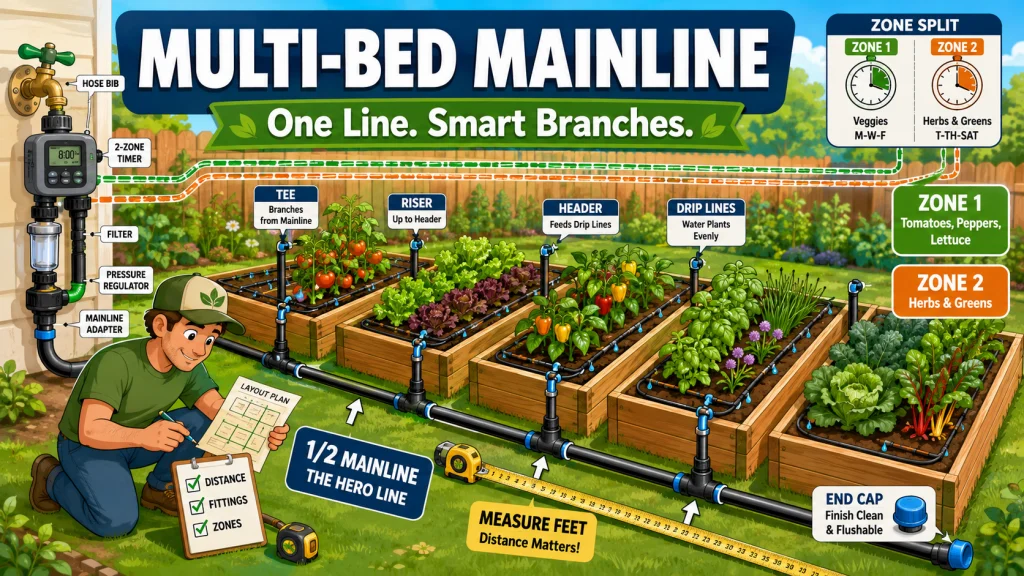
Two raised beds can share one head assembly, one timer, and one mainline. So can six, up to a practical limit set by how far the mainline runs and how much pressure your faucet actually delivers. This guide lays out the standard layout for running drip irrigation to several raised beds at once: how the … Read more

How to Connect Drip Irrigation to Raised Beds: From the Spigot to Multiple Beds With the Right Mainline

How To Connect Drip Irrigation To Raised Beds

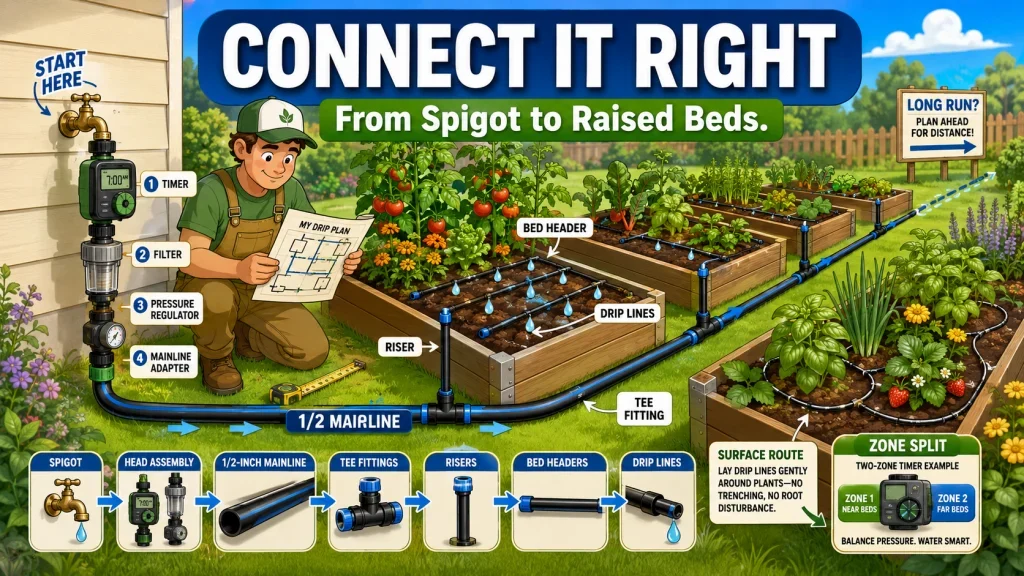
Connecting drip irrigation to raised beds looks simple on the box: hose bib, tubing, done. In practice it depends on how many beds you have, how far the spigot sits from the first bed, and whether you are wiring up a brand new system or threading lines into a bed that is already full of … Read more

Drip Irrigation Fittings for Raised Beds: What Each Fitting Does and Which Ones You Will Actually Need

Drip Irrigation Fittings For Raised Beds

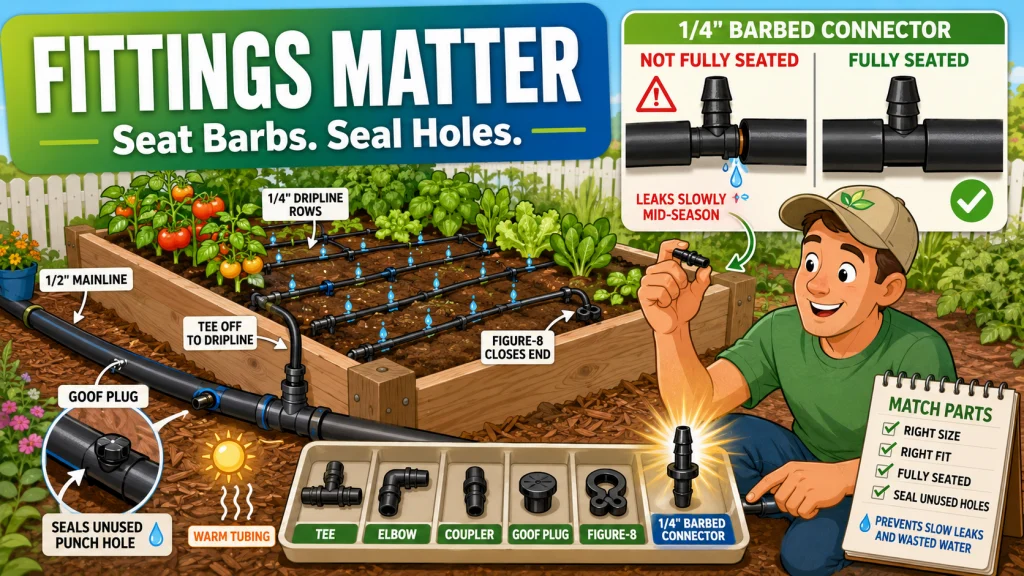
Every drip kit for raised beds ships with a collection of small plastic fittings that are easy to ignore until one of them leaks, pulls out, or turns out to be missing. This article covers the drip irrigation fittings for raised beds used in a standard hose-end setup: what each type does, where it belongs … Read more

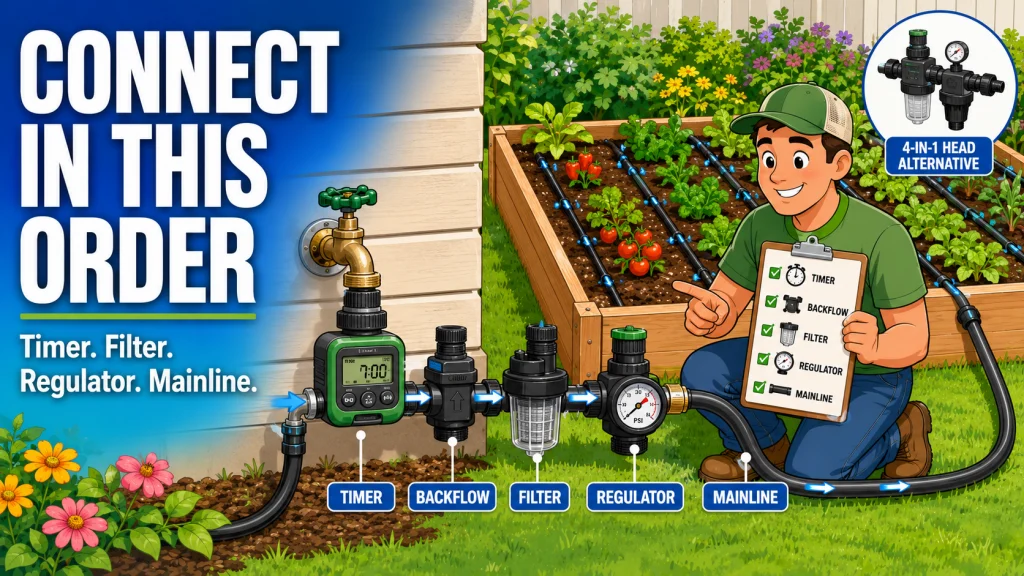
Raised Bed Drip Irrigation Head Assembly: The Correct Component Order and Why the Timer Position Matters Most

Raised Bed Drip Irrigation Head Assembly

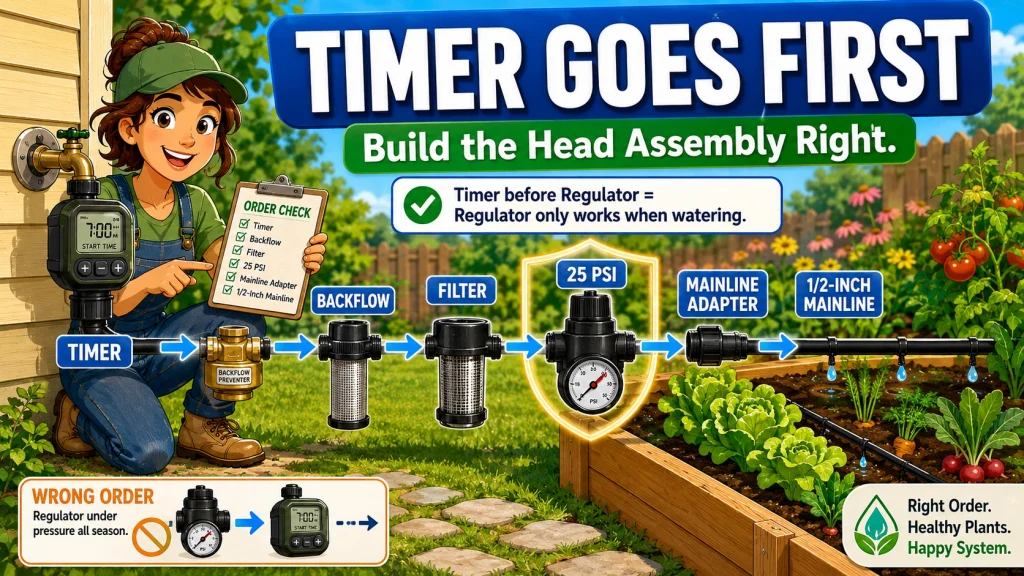
Putting together a drip irrigation head assembly for a raised bed takes about five minutes with the right components laid out in front of you. It can take most of a season to understand what went wrong if those components go in the wrong order. This article covers the correct sequence from spigot to mainline, … Read more

Drip Irrigation Filter for Raised Beds: Why the Washer in Your Kit Is Not Always Enough

Drip Irrigation Filter Raised Bed

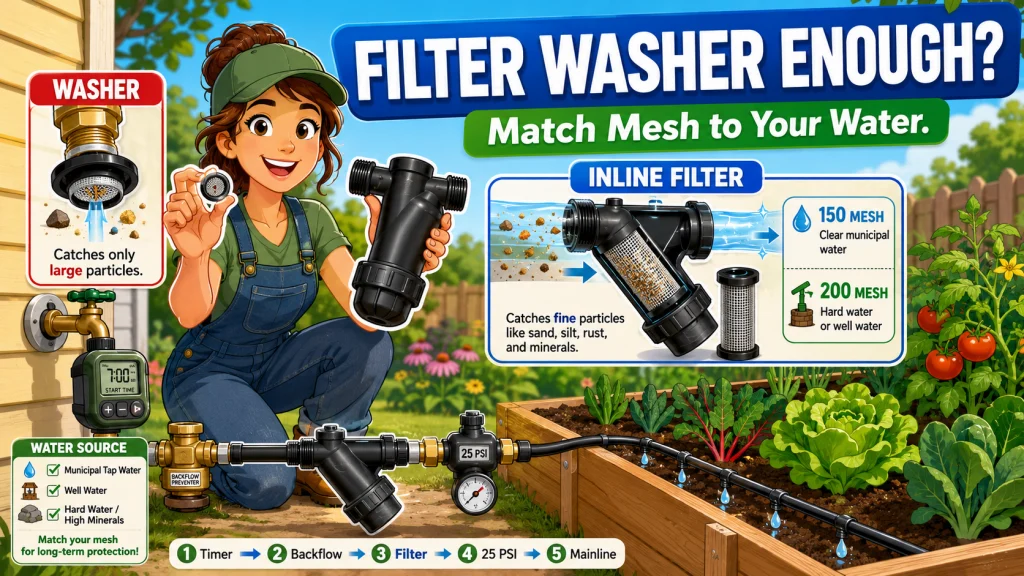
Most raised bed drip kits ship with some form of filtration, but what came in the box is not always enough for your water source. A filter washer built into a swivel adapter and a true inline filter are not the same thing, and the difference matters for emitter clogging, system longevity, and whether the … Read more

Drip Irrigation Backflow Preventer for Raised Beds: When It Is Required, When It Is Optional, and What Happens If You Skip It

Drip Irrigation Backflow Preventer For Raised Beds

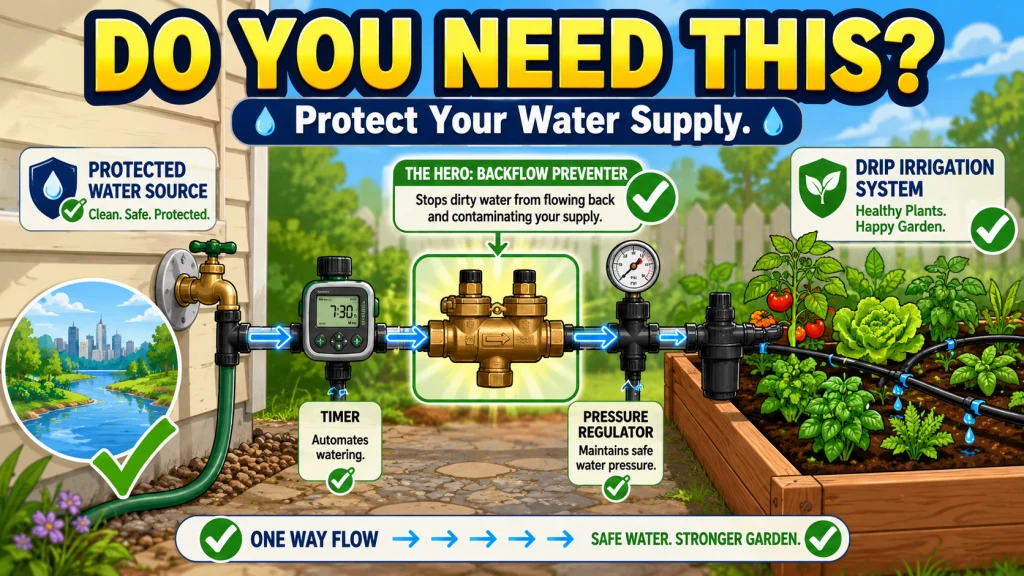
A backflow preventer on a raised bed drip system does one specific thing: it stops water from flowing backward out of your drip lines and into your home’s drinking water supply. In most US jurisdictions that protection is not optional. It is a code requirement on any outdoor irrigation connection to a potable water line, … Read more

Drip Irrigation Pressure Regulator for Raised Beds: Do You Need One, What PSI, and When to Skip It

Drip Irrigation Pressure Regulator Raised Bed

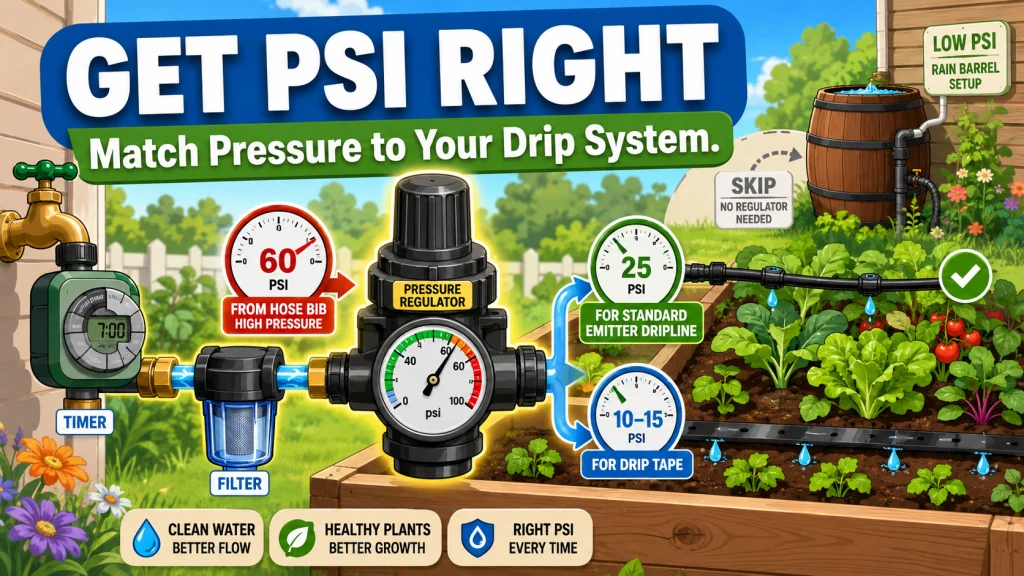
A pressure regulator is one of those components that looks optional until a fitting blows off a barbed connector at 60 PSI and lands in the tomatoes. US residential water pressure typically runs between 40 and 80 PSI, and most drip emitters are designed to operate between 15 and 30 PSI. That gap is why … Read more

Raised Bed Drip Irrigation Components: What Every Part Does and Why the Assembly Order Matters

Raised Bed Drip Irrigation Components

A raised bed drip system has fewer moving parts than most people expect, but the assembly order at the faucet matters more than the component list. Get the order wrong and the pressure regulator sits under full static line pressure every time the system is off, which wears it out faster than it should and … Read more