Most raised bed drip kits ship with some form of filtration, but what came in the box is not always enough for your water source. A filter washer built into a swivel adapter and a true inline filter are not the same thing, and the difference matters for emitter clogging, system longevity, and whether the setup runs reliably past its first season. This covers what the filter actually does in a drip system, how to tell which type your kit includes, how mesh ratings match different water types, and when the kit’s filter is worth replacing before installation rather than after a clogging problem shows up.
What the Filter Does and Why Emitter Size Makes It Critical
A drip irrigation filter has one job: catch sediment, mineral particles, and organic debris before they reach the emitters. That job sounds simple until you understand how small the emitter passages actually are. A standard drip emitter has an internal flow path measured in fractions of a millimeter. A single grain of fine sand, a small flake of calcium scale from a hard water supply, or a bit of organic matter that passed through the garden hose is large enough to partially block that passage. One blocked emitter means a dry patch in the bed. Several blocked emitters means hand-watering while you troubleshoot a system that looked fine when you installed it.
The filter is the one component in the head assembly that keeps those particles out of the drip lines entirely. Everything downstream of the filter, including the pressure regulator, the mainline tubing, the emitter line, or the drip tape, depends on the filter doing its job correctly. A clogged emitter is a symptom. The filter is where the problem gets prevented.
Field Note: The most frustrating clogging calls I get are from gardeners who installed a complete kit, ran it for a season, and then started seeing dry spots in the bed the following spring. When I ask what kind of filter came with the kit, the answer is usually “I think there was a little screen in the adapter.” That screen is not nothing, but it is not what catches the particles that block emitters over a full growing season.
The Filter Washer vs the Inline Filter
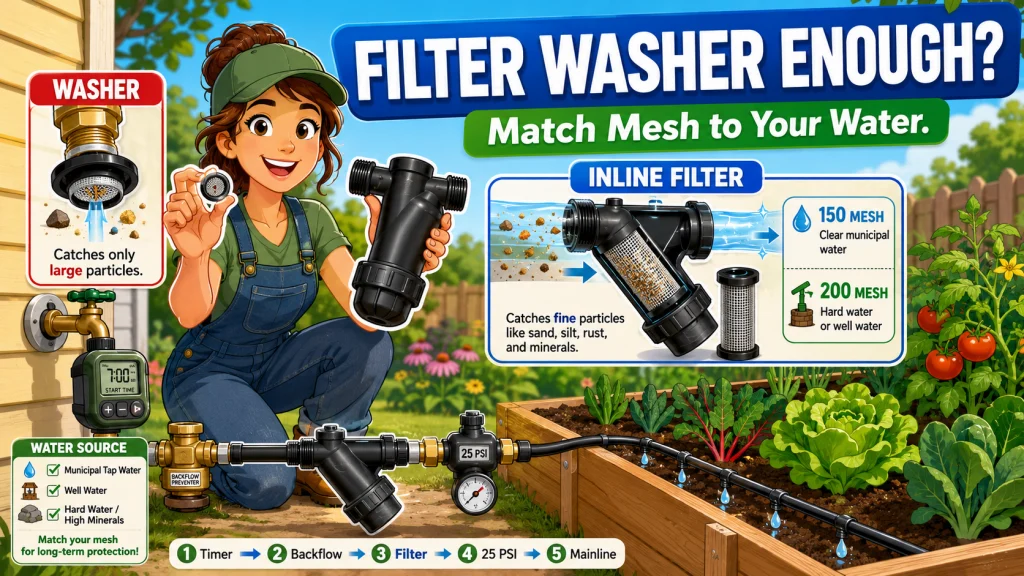
Many drip kits include what looks like a filter but functions more like a coarse screen. The component is a rubber washer with a small mesh screen pressed into the center, built into the swivel adapter that connects the hose to the rest of the head assembly. It catches large particles, sand grains, and visible debris, but it passes fine sediment, mineral scale, and organic particles that are small enough to move through a hose without detection. This is a filter washer, not a true inline filter, and the distinction matters for how clean the water reaching your emitters actually is.
A true inline filter is a separate unit, usually shaped like a cylinder or a Y, with a housing that holds a removable mesh screen element. It threads into the head assembly between the backflow preventer and the pressure regulator and sits in the water path long enough to trap fine particles before they continue downstream. A 150 to 200 mesh inline filter catches particles as small as 75 to 100 microns, which is a meaningfully finer cut than a filter washer provides. The screen element can be removed, rinsed, and reinstalled, which is also what makes it maintainable across multiple seasons.
Built into the swivel adapter at the hose connection. Catches large particles and visible debris. Cannot be removed and cleaned as a standalone element. Does not catch fine sediment, mineral particles, or the small bits of organic matter that cause emitter clogging over time.
A separate unit in the head assembly with a removable screen element. Catches particles down to 75 to 100 microns depending on mesh rating. Cleanable and replaceable. Provides the filtration level that most drip emitters actually require to run consistently across a full season.
The filter washer is not useless. For a setup with clean municipal water, a hose in good condition, and emitters with a wider flow path, a filter washer may be enough for one season. The problem is that most gardeners do not find out the washer was insufficient until emitters start clogging, and by then the drip tape or emitter line may already have debris inside it that a new filter will not fix on its own.

This heavy-duty inline screen filter uses a 155 mesh element to block particles from reaching drip emitters and micro sprinkler water passages in both residential and commercial installations. Designed for low-maintenance operation, it provides reliable filtration to keep drip and micro sprinkler systems running without interruption.
Check On AmazonIf you click this link and buy, we earn a commission at no additional cost to you.
Mesh Ratings and Which One Matches Your Water
Mesh rating on a drip filter tells you how large a particle has to be before the screen catches it. A higher mesh number means finer filtration. The three ratings that come up most often in raised bed drip setups are 100-mesh, 150-mesh, and 200-mesh.
The right mesh for your setup depends on your water source and the emitter type you are using. Point-source emitters with turbulent-flow passages tolerate slightly coarser filtration better than drip tape, which has thinner walls and smaller internal channels. If you are not sure which emitter type you have, the mesh rating guide below is a safe starting point based on water source alone.
| Water Source / Condition | Recommended Mesh | Reason |
|---|---|---|
| Municipal water, clear, no visible turbidity | 150-mesh | Catches fine sediment without restricting flow at typical municipal pressure |
| Municipal water in a hard water region | 200-mesh | Catches calcium scale particles before they accumulate in emitter passages |
| Well water, clear output | 200-mesh | Well water often carries fine iron or mineral particles not visible to the eye |
| Well water with visible color or turbidity | 200-mesh, clean more frequently | Higher sediment load requires more frequent inspection of the screen element |
| Pond, surface water, or collected runoff | 200-mesh minimum, plus pre-filter | Organic load and biological particles exceed what a standard screen filter handles alone |
If you are using pond or surface water collected from runoff, a standard screen filter is not the right first line of defense. The organic load in that water is high enough that a screen filter clogs quickly and still passes biological particles that can block emitters or grow inside drip tape. For surface water, a self-flushing or sand media filter upstream of the screen filter is the appropriate approach. That is a different setup than a typical hose-bib raised bed system, but worth knowing if you are pulling from a tank or barrel filled from surface sources rather than a pressure-fed well or city line.

This inline filter protects downstream drip components from debris using a pre-installed 200 mesh stainless steel filter element rated to catch particles as small as 75 microns. The glass-filled polypropylene body handles up to 150 psi and fits any standard three-quarter inch irrigation valve via male pipe thread connections on both ends. The cap unthreads quickly for easy filter cleaning without tools.
Check On AmazonIf you click this link and buy, we earn a commission at no additional cost to you.
When the Kit’s Filter Is Worth Replacing Before You Start
If your kit came with a filter washer rather than a true inline filter, and any of the following describe your situation, I would upgrade the filter before the season starts rather than after the first clogging problem appears:
- You have well water, regardless of how clear it looks coming out of the tap
- Your water has visible color, cloudiness, or a mineral smell or taste
- You are in a region with known hard water or high calcium content
- You experienced emitter clogging or uneven flow in a previous season with the same water source
- You are using drip tape, which has a smaller internal channel than emitter dripline and is less tolerant of fine sediment
- You plan to run the system for more than one season without replacing the drip lines
The upgrade is a 3/4-inch inline Y-filter or T-filter with a 150 to 200 mesh screen element, depending on your water source. It installs in the head assembly between the backflow preventer and the pressure regulator, at the same thread size as the other components in the chain. The screen element is removable for cleaning, which is the detail that makes it worth having compared to a washer that cannot be serviced without replacing the whole swivel adapter.
If your kit came with a true inline filter already, check the mesh rating on the housing or documentation. Kits that include a real filter usually state the mesh number somewhere on the packaging or in the instructions. If the rating is 150-mesh or above and your water is clear municipal supply, you are likely in good shape. If the kit does not state the mesh rating, treat it as a coarse filter and upgrade if you have any of the conditions in the list above.
The raised bed drip irrigation head assembly has the full connection sequence, including where the filter sits relative to the backflow preventer, pressure regulator, and mainline adapter, and which thread standards to watch for when adding an inline filter as a separate component.

This tee-style filter installs at a 90-degree angle on any standard hose bib or garden hose end, making it well suited for tight spaces and complex system layouts. A 150 mesh screen catches debris before it reaches downstream emitters and sprinkler components, and a removable hose thread cap provides quick access for cleaning. Connects via three-quarter inch female hose swivel inlet and male hose thread outlet, and must be installed downstream of a timer or valve rather than under constant pressure.
Check On AmazonIf you click this link and buy, we earn a commission at no additional cost to you.
Filter Maintenance: One Task That Protects the Whole System
A clogged inline filter restricts flow to every emitter in the system before any individual emitter shows symptoms. This is the part that catches most gardeners off guard. When a single emitter clogs, one spot in the bed dries out. When the filter clogs, the whole system runs slowly or unevenly, and the problem looks like low pressure or a timer issue rather than a dirty screen.
At the end of each season, unscrew the filter housing, pull out the screen element, rinse it under running water, and inspect it for buildup. Calcium scale looks like a white or cream-colored coating on the mesh. Iron deposits look orange or reddish. Organic buildup is usually dark and soft. Any of those deposits indicate the filter is working, but they also tell you something about your water source that affects how often the filter needs attention during the season, not just at the end of it.
For well water or hard water setups, I usually recommend a mid-season check around the six-week mark. A screen that is already loading up at six weeks needs to come out and be rinsed before it starts restricting flow. For clean municipal water with no visible buildup after the first season, an end-of-season inspection is usually sufficient.
Filter Tip: Hold the screen element up to light when inspecting it. Fine mineral scale can coat the mesh evenly enough that the filter looks clean from the outside while flow is already reduced. If in doubt, rinse it anyway. A clean screen costs nothing. A clogged season costs time and plants.
Final Thoughts: Check What Came in the Box Before the Lines Go In
The filter is the easiest component to overlook in a raised bed drip setup because it is small, it does not move, and it works silently until it does not. The filter washer vs inline filter distinction is the kind of thing that does not matter until you are pulling emitter line out of a planted bed trying to figure out why half of it is running slow in July.
Before the season starts, open the head assembly components and find the filter. If it is a screen built into a swivel adapter, that is a filter washer. If it is a separate housing with a removable screen element, that is a true inline filter. Identify your water source, match it to the mesh rating in the table above, and upgrade if the kit’s filter does not match what your water actually requires. That decision takes five minutes and typically costs less than a bag of fertilizer.
For a full walkthrough of how a raised bed drip system comes together from hose bib to emitter, including how the filter fits into the complete head assembly, the raised bed drip irrigation setup is the right place to start. And if you are still deciding which components your setup needs before committing to a layout, the raised bed drip irrigation components covers each part of the system with the same level of detail.

This all-in-one Y filter combines a 200 mesh screen with a preset 30 psi pressure regulator in a single unit, connecting to a water supply line via a three-quarter inch female pipe thread inlet. It handles flow rates from 0.2 to 5 gallons per minute and protects downstream emitters from both excess pressure and particulate debris. The removable filter screen and flush cap make cleaning straightforward without disassembling the whole unit.
Check On AmazonIf you click this link and buy, we earn a commission at no additional cost to you.
FAQs
🔍 Do I need a filter for raised bed drip irrigation?
Yes. Emitter passages are narrow enough that fine sediment, mineral scale, and organic particles can partially block them over time. Most kits include some form of filtration, but whether it is sufficient depends on your water source. A filter washer catches large debris. A true inline filter with a 150 to 200 mesh screen catches the fine particles that cause emitter clogging.
💧 What is the difference between a filter washer and an inline filter?
A filter washer is a screen built into the swivel adapter at the hose connection. It catches large particles but passes fine sediment and mineral scale. A true inline filter is a separate housing with a removable, cleanable screen element that catches particles down to 75 to 100 microns. For well water or hard water, the inline filter is the one that actually protects emitters.
🌊 What mesh filter do I need for well water in raised beds?
200-mesh minimum for well water, even if the output looks clear. Well water often carries fine iron or mineral particles that are not visible but will accumulate in emitter passages over a season. With well water, plan on checking the filter screen mid-season rather than only at the end of the season.
📍 Where does the inline filter go in the drip head assembly?
Between the backflow preventer and the pressure regulator. The filter needs to sit upstream of the regulator so it catches debris before the water pressure is reduced, which keeps both the filter and the regulator performing as intended. The full assembly order is: timer, backflow preventer, filter, pressure regulator, then mainline adapter.
🧹 How often should I clean a drip irrigation filter on a raised bed?
For municipal water with no visible buildup, an end-of-season inspection and rinse is usually enough. For well water or hard water setups, check around the six-week mark in the season and rinse the screen if there is any visible buildup. A clogged filter restricts flow to the entire system before individual emitters show any symptoms.
⚠️ Can I use pond water or collected rainwater in a raised bed drip system?
With caution. Collected rain barrel water from a closed barrel is generally lower-risk. Pond or surface water has a much higher organic and biological load that overwhelms a standard screen filter quickly and can introduce material that grows inside drip tape. For surface water sources, a pre-filter upstream of the inline screen filter is needed, and the maintenance schedule is more demanding than a standard hose-bib setup.