A drip system running on a timer that sounds careful enough can still overwater a raised bed, and the symptoms often get blamed on disease or nutrients instead of the schedule itself. This guide walks through what overwatered plants from drip irrigation actually look like, including yellowing lower leaves, soggy soil that won’t drain, and a sour smell near the roots. You’ll also see the simple calculation that compares what a timer is really delivering each week against what the crop actually needs. The fix is rarely a new kit, it’s usually a smaller run time and a few days of patience to see how the plants respond.
Why a Reasonable-Sounding Timer Can Still Overwater Your Raised Bed
Overwatering with drip irrigation in a raised bed is the problem nobody expects, because drip systems are sold on the idea of precision. A timer set to 30 minutes, three times a week, sounds careful enough that most gardeners never go back and check it against what the bed is actually receiving. This is not about a leak somewhere in the line or a row of clogged emitters, those create their own watering problems and get handled separately under raised bed drip irrigation troubleshooting. This is about a system doing exactly what the timer tells it to do, and still putting down more water than the bed can use.
In my experience, the bed that overwaters quietly is more common than the one that floods. A 4-by-8 bed planted with tomatoes and peppers can look fine on the surface for weeks while the root zone underneath stays saturated, because the top inch of raised bed soil dries fast in sun and wind even when the depth below it never gets a real chance to drain between waterings. The fix starts with recognizing the symptoms, then running the numbers on the schedule itself, not by guessing at a shorter run time and hoping it helps.
Why Drip Overwatering Catches Gardeners by Surprise
Drip irrigation gets marketed as the precise option compared to hand watering or a sprinkler soaking the whole bed at once, and that reputation is mostly earned. But it creates a specific blind spot: gardeners assume that as long as the timer setting sounds modest, the system can’t be overwatering. The mistake I run into most often is a timer set to a number heard somewhere, thirty minutes, three times a week, with nobody ever checking that number against the emitter flow rate or how much water the crop actually needs that week.
That gap between a number that sounds safe and a number that’s actually being delivered is where most raised bed overwatering starts. The next two sections cover what to look for in the plants themselves, then how to run the calculation that confirms it.
What Overwatered Plants in a Raised Bed Actually Look Like
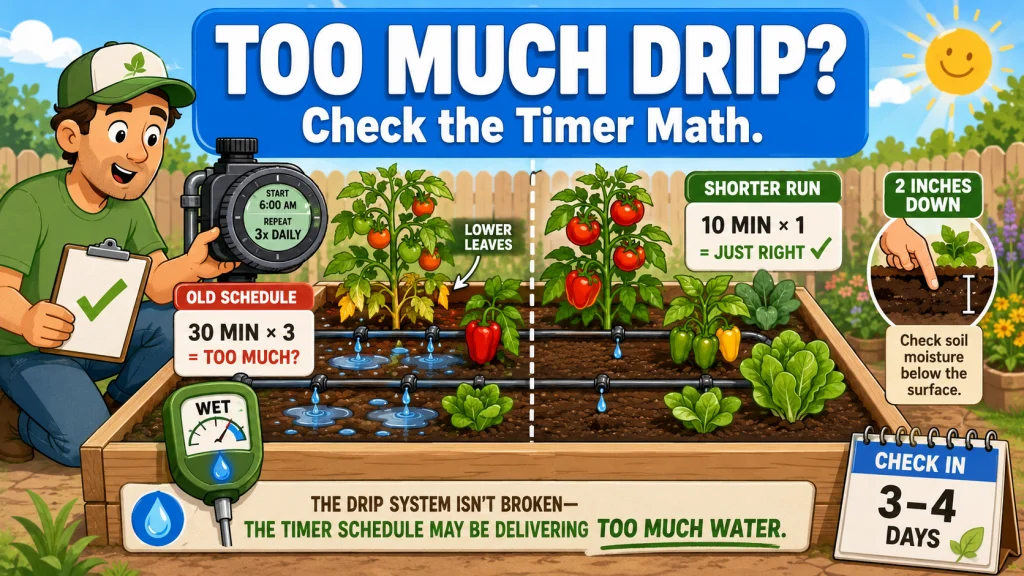
Overwatered plants from drip irrigation in a raised bed don’t always look like they’re drowning. The most common pattern I see is yellowing on the lower, older leaves first while the newer growth at the top still looks fine, which throws people off because they expect a nutrient problem instead. Wilting is the other confusing symptom: a plant wilting while the soil underneath is visibly wet or saturated isn’t thirsty, it’s stressed from a root zone that can’t get enough oxygen.
A short checklist helps separate overwatering from something else going on in the bed:
- Yellowing that starts on lower leaves with no other sign of nutrient deficiency
- Wilting leaves even though the soil is wet or saturated to the touch
- A sour or rotten smell coming from the soil near the root zone
- Soil pulling away from the inside edges of the bed while the center stays wet, a sign of surface waterlogging
- A thin layer of algae or green film forming on top of the soil directly under the emitters
Field Note: The bed that sticks with me had three tomato plants yellowing from the bottom up while the gardener insisted the soil dried out by afternoon. The surface had dried, raised bed soil does that fast in full sun, but two inches down at midday it was still saturated and starting to smell sour. The timer wasn’t broken. It was running on a schedule built for a hotter month than the one they were actually in.
None of these symptoms alone proves overwatering, soil type and recent weather both play a role, but seeing two or three together in a bed on a steady drip schedule is a strong enough pattern to move to the next step: checking the math instead of guessing.
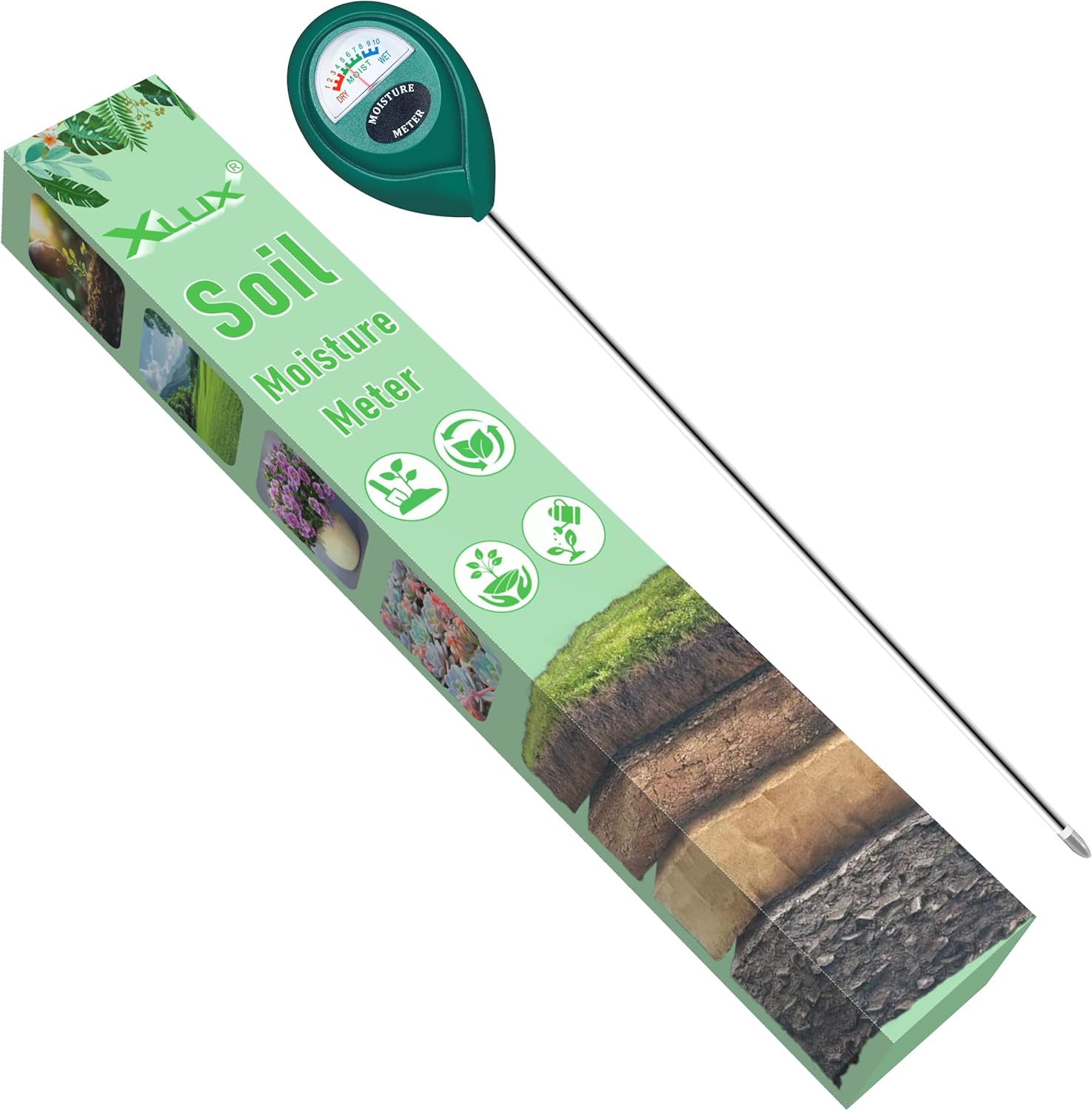
This moisture meter measures soil conditions deep inside pots and gardens with a probe 5.5 inches longer than standard styles, ideal for larger or deeper containers. Simply insert it into the soil for an immediate reading on the large, easy-to-read dial, which shows three zones across ten scales. Its single probe design causes less root disturbance than double or multiple probe meters. For best results, avoid testing hard soil or liquids, and remove the probe within 5 minutes to prevent corrosion of the metal tip.
Check On AmazonIf you click this link and buy, we earn a commission at no additional cost to you.
Doing the Math: How Much Water the Schedule Is Really Delivering
Too much water from a raised bed drip schedule rarely looks dramatic at first. The diagnostic step that actually settles this is comparing what the timer delivers against what the crop needs in a week, not adjusting the dial and hoping. Start with emitter flow, number of emitters, total weekly run time, and bed size. Once you know the weekly gallons, divide that by the bed’s square footage, then compare the result with the crop’s weekly water need.
| Schedule Element | What It Tells You |
|---|---|
| Run time per session | How long water actually flows each time the system turns on, for example 30 minutes |
| Sessions per week | Total weekly run time once multiplied, for example 3 sessions equals 90 minutes a week |
| Emitter flow and count | How many gallons the system can deliver during that weekly run time |
| Bed size | The area receiving that water, for example a 4-by-8 bed equals 32 square feet |
| Water delivered per week | What the bed is actually receiving over that time, for example about 1.8 inches |
| Crop water need per week | The benchmark you’re checking against, for example about 1 inch for many vegetable crops in cooler weather |
| Overage | How far the schedule runs past the crop’s actual need, for example about 80 percent in this scenario |
Take a system running 30 minutes, three times a week. If that adds up to roughly 1.8 inches of water across the week, and tomatoes or peppers in that bed only need about 1 inch over the same period, the schedule isn’t borderline, it’s overwatering by roughly 80 percent.
Lettuce and tomatoes sharing one bed make this more complicated, since their root depth and water need aren’t the same, and a schedule sized for the tomatoes can flood lettuce roots sitting much closer to the surface. If different crops in one bed need noticeably different totals, that’s usually a sign the bed needs split zones or separate lines rather than one schedule trying to serve everything at once.

This robust hose-end timer works with sprinklers, drip irrigation, and soaker hoses, offering simple automatic programming with full 7 day scheduling for worry-free watering. An extra-large dial and readout screen make setup and schedule review easy, while one-touch buttons allow quick cancellation, a rain delay of up to 96 hours, or manual watering on demand. The display also shows the next scheduled cycle and time remaining on the current one.
Check On AmazonIf you click this link and buy, we earn a commission at no additional cost to you.
Ruling Out a Drainage Problem Before Touching the Timer
Before changing anything about the timer, check whether the bed itself is draining. Soil that’s still saturated 2 to 4 hours after the system shuts off has a drainage problem that exists independent of how long the timer runs, and shortening the schedule won’t fix that on its own.
Compacted soil at the bottom of a newer raised bed can create what’s sometimes called a perched water table, where water pools above a dense layer instead of moving down and out. Drainage gaps or holes at the base of the bed need to stay open and clear of debris for that movement to happen at all. If the bed isn’t draining, no schedule adjustment will solve the symptoms you’re seeing, the structure itself needs attention first.
Warning: If soil stays saturated well past the 4-hour mark no matter how the timer is set, don’t keep adjusting run time. Check that drainage holes or gaps at the bottom of the bed are actually open before assuming the irrigation schedule is the only variable.
Adjusting the Schedule Without Overcorrecting Into Drought Stress
Once drainage checks out and the math confirms the schedule is running past what the crop needs, the fix is usually smaller than people expect. Cut run time by about 25 percent, then leave it alone for 3 to 4 days before judging the result. Plants react slower than a timer dial does, and checking the next morning isn’t enough time to see anything real.
A brief period of mild stress while the soil dries out a bit is less harmful than continuing to overwater while waiting for certainty. This is also where seasonal timing matters more than people give it credit for: a schedule that made sense in July is often still running in September on the same settings, even though the days are shorter, the sun is lower, and the bed isn’t losing water nearly as fast.
Pro Tips: Mark the date any time you change the run time, then check back in 3 to 4 days instead of relying on memory. A schedule that gets adjusted but never re-checked tends to drift right back into the same overwatering pattern by the next season.

This pressure regulator maintains an optimal 25 PSI to keep drip lines and emitters running at consistent flow, with a 20 gallon per minute capacity to support larger systems. It connects to any 3/4 inch male threaded faucet, garden hose, or component for easy setup. Built from UV and chemical-resistant materials, it offers durable, reliable performance season after season, and pairs well with a compatible Rain Bird hose-end timer for automated watering.
Check On AmazonIf you click this link and buy, we earn a commission at no additional cost to you.
Final Thoughts: Trust the Math Over the Habit
A raised bed drip system doesn’t overwater because it’s broken, it overwaters because a timer setting got chosen once and never checked against what the bed and the crop actually needed. The fix is rarely a new kit or a redesigned layout, usually it’s a smaller run time, a few days of patience, and a habit of re-checking the schedule whenever the season changes. If the rest of the setup, pressure, layout, or filtration, still needs work beyond the schedule itself, the broader raised bed drip irrigation setup tips guide covers those decisions in more depth.
FAQs
💧 How do I know if my raised bed drip irrigation is overwatering my plants?
Look for yellowing on the lower leaves, wilting despite wet soil, and a sour smell near the roots. If you see two or three of these together, compare your weekly run time against what the crop actually needs before changing anything.
🍂 Why are the lower leaves on my plants turning yellow even though I’m using drip irrigation?
Lower leaf yellowing with no other deficiency signs usually points to saturated roots rather than a nutrient gap. Drip systems can cause this just as easily as overhead watering if the schedule is delivering more water than the bed drains between sessions.
⏱️ Should I just shorten my drip irrigation timer if I think I’m overwatering?
Only after checking drainage first. If the soil stays saturated for hours regardless of run time, the issue is drainage, not the timer, and shortening the schedule alone won’t fix it.
🧱 Why is the soil in my raised bed still wet hours after the drip system shuts off?
Soil staying saturated past 2 to 4 hours usually means a drainage problem, often compacted soil near the bottom of the bed or blocked drainage gaps. Check that water has a path out before adjusting the irrigation schedule.
🌱 How long should I wait after cutting back drip irrigation before checking on my plants?
Give it 3 to 4 days. Plants respond slower than a timer change, and checking the next morning won’t show whether the adjustment actually helped.
❄️ Can overwatering from drip irrigation happen in cooler weather even if it didn’t in summer?
Yes. A summer schedule left running into cooler fall weather is one of the most common causes of overwatering, since the bed isn’t losing water as fast but the timer never changed.