The question I hear first when someone is setting up drip irrigation for a raised bed is almost always which kit should I buy. It is a fair question, and it is rarely the one that decides whether the system actually works once it is connected to a hose bib. This is not a kit comparison and it will not tell you which product to buy. It is the pattern I keep noticing: the questions that get skipped, and the ones I wish came up before the kit does.
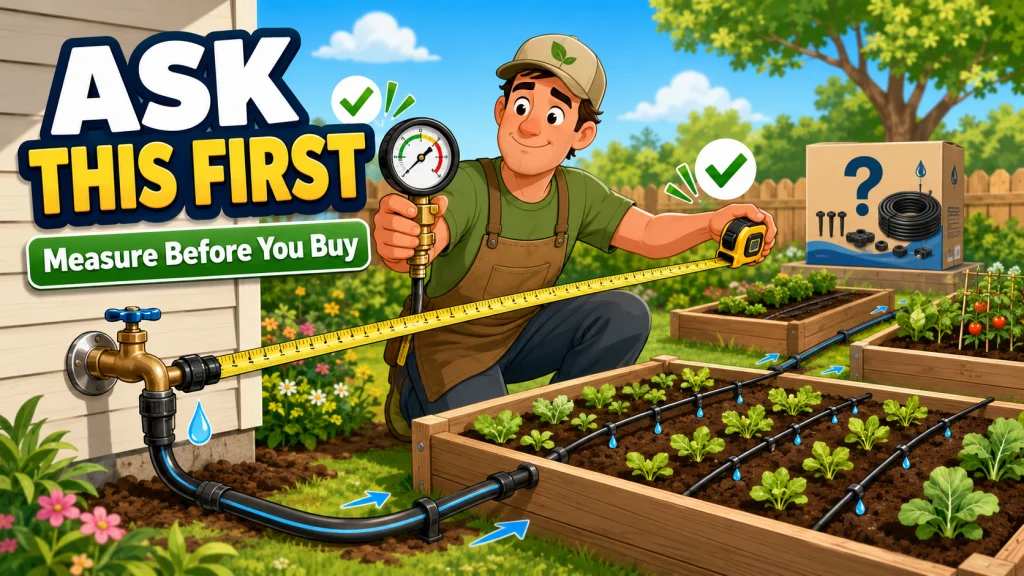
The Question That Arrives Before Any of the Details
When a homeowner reaches out about a raised bed drip setup, the opening question is almost always the same. Which kit should I get? It usually shows up before I know how many beds are involved, how far the nearest spigot sits from the garden, or what the water pressure looks like when that spigot is turned on full. I understand why. A kit is something concrete to research, compare, and add to a cart. Pressure and distance are not things most people think to check before they start shopping.
The problem is that the kit question, asked on its own, does not have a useful answer yet. A kit rated for three raised beds works fine for three beds sitting close to the spigot with decent pressure. The same kit struggles when those three beds are spread sixty feet apart, or when the spigot feeds a hose bib that barely manages 20 PSI on a hot afternoon. I can recommend a kit number all day. Whether it actually waters the garden depends on facts nobody has mentioned yet.
The Raised Bed Drip Irrigation Questions That Almost Never Come Up
Here is what I almost never get asked first, even though these are the questions that usually decide whether a raised bed drip system holds up: is my water pressure right for a drip system, how many beds can one kit realistically cover before coverage gets thin, and what happens to the tubing once the first freeze hits. Those three show up eventually, usually after something has already gone wrong. By then the gardener is troubleshooting a dry corner or a cracked fitting instead of planning around it.
The table below shows the pattern I see most often: the question that gets asked first, next to the question that would have actually mattered.
| What People Usually Ask First | What Actually Decides the Outcome |
|---|---|
| Which drip kit is the best one | What is the water pressure at the spigot feeding the system |
| Will this kit cover my whole garden | How many beds, and how far apart, can run off one mainline before pressure drops |
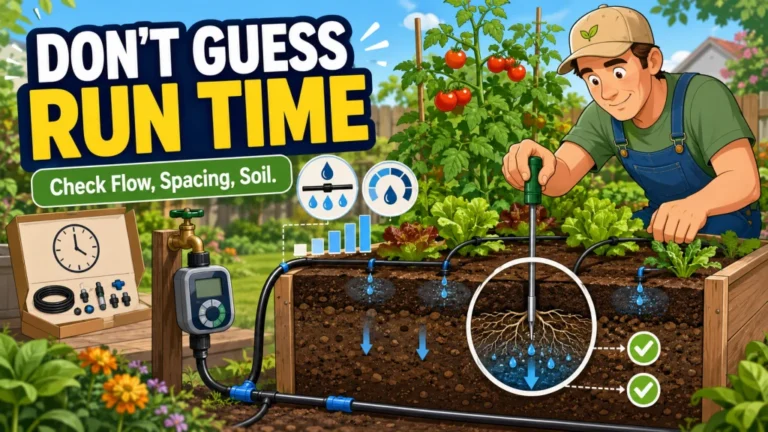
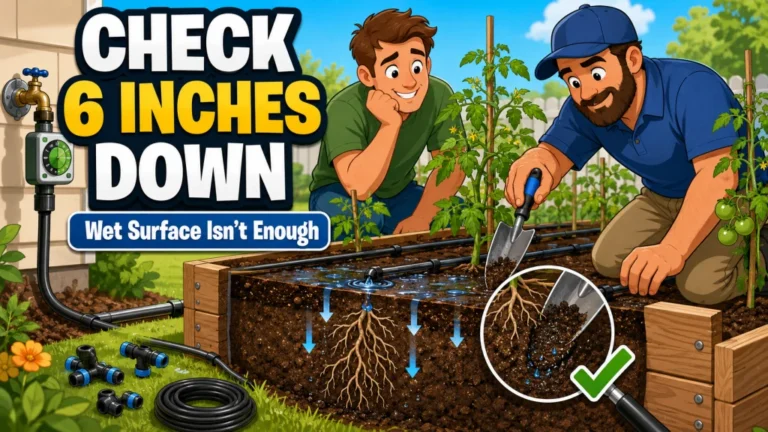
| How long should I run it each day | What soil type and crop mix is in each bed, since a clay-heavy lettuce bed and a sandy tomato bed do not run the same |
| Is this brand better than that brand | What happens to the lines and fittings once the first frost hits |
None of the answers in that second column are hard to get. They just take a few minutes with a pressure gauge, a tape measure, and a look at the calendar. The kit question can wait until those are answered.
Why Most Irrigation Technician Advice Comes After the Mistake, Not Before It
Most of the information available before someone buys a kit is written around the product, not the garden. The box says it waters up to three raised beds. It does not say what happens to pressure and coverage when the run to those three beds is sixty feet of half-inch tubing instead of fifteen. The spec sheet is accurate. It is just answering a different question than the one the homeowner actually has.
That is the gap. A buying guide can tell someone what a kit includes. It cannot tell them whether their specific spigot, their specific bed layout, and their specific crop mix will work with it, because that information lives in the garden, not in the box.
Pick a kit first based on the coverage claim on the package, then try to make the garden fit it.
Measure pressure and distance first, then choose a kit, drip tape, or emitter line that fits the garden as it already is.
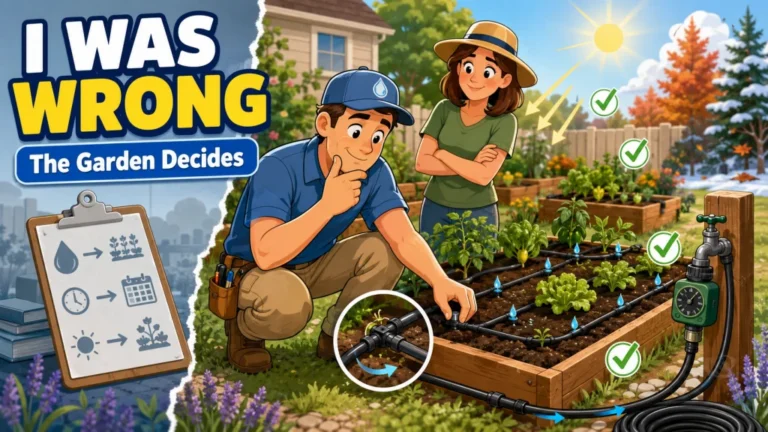
That is also why two homeowners can get completely different results from the same kit. One garden may have beds sitting ten feet from a strong spigot. Another may have the same number of beds stretched across the yard with weaker pressure at the far end. The product did not change, but the garden did. That is why brand debates get noisy so fast: people are often comparing outcomes without comparing the layout that created them.
I am not talking about lawn zones or a full irrigation redesign here. For a raised bed vegetable garden, this is usually a quick check with a hose-end pressure gauge and a tape measure, not a project that needs a professional.
The Three Questions I Always Ask Before Recommending Anything
Before I tell anyone what to buy, I ask three things. The answers change the recommendation every time, which is exactly why a generic kit description cannot replace them.
- What is the water pressure at the spigot you plan to connect to, measured with a hose-end gauge rather than guessed?
- How many beds need to run off this system, and roughly how far is the farthest one from the water source?
- Do you plan to leave the system connected through winter, or does it need to come apart and get stored before the first hard freeze?
The answers to those three questions eliminate most of the confusion that shows up later. They also depend entirely on the garden in front of you, which is why I am not going to hand out a universal answer here. A raised bed drip irrigation setup guide is the better place for that, since it can walk through pressure ranges, bed layouts, and component choices once you actually know your numbers.
The Pattern That Surprised Me
The homeowners who had already made one mistake almost always asked better questions the second time around. Someone who had a dry corner in a 4-by-8 tomato bed because the line was snaked around like a maze did not ask which kit was best. They asked why the corner stayed dry and what spacing would fix it. Someone who lost a winter’s worth of fittings to a hard freeze did not ask for a brand recommendation. They asked how to drain the lines properly before the cold hit.
Field Note: The smoothest conversations I have had were almost never with someone buying their first system. They were with someone replacing a setup that had already taught them what mattered. A first mistake is not fun, but it tends to ask better questions than any product description does.
That pattern is part of why the order of operations matters more than the brand. A specific problem produces a specific question, and a specific question gets a useful answer. A vague question, no matter how much research went into asking it, tends to get a vague answer back.
Final Thoughts: What to Ask About Drip Irrigation Before You Shop
If there is one thing I wish more people asked about drip irrigation before they bought anything, it is not about brands at all. It is about their own spigot, their own bed count, and their own climate. None of that shows up on a spec sheet, in a five-star review, or in a forum thread about which brand someone swears by. It shows up only once you go stand next to your own garden and check.
Once you have those numbers, the actual buying decision gets a lot smaller. The layout and component side is covered in the setup guide already mentioned above, and once your garden’s specifics are on the table, a guide to choosing a raised bed drip irrigation kit can take it from there. The kit question is still worth asking. It just works a lot better as the second question instead of the first.
Where These Patterns Come From
The questions and patterns in this piece come from real homeowner threads and field experience, not a single survey. A few examples that line up with what I see in residential raised bed installs:
- A raised bed irrigation recommendation thread on Bogleheads.org, where homeowners debated brand names before anyone asked about spigot pressure or bed distance, which is the exact pattern this article describes.
- A drip system troubleshooting thread on Garden.org showing a homeowner measuring emitter output after the fact, instead of checking pressure and soil type before installing.
- A practical breakdown of pressure ranges and tubing distance limits for spigot-fed raised bed drip systems, which backs up why distance and pressure matter more than brand once a kit is connected.
None of these sources tell a single universal story. They all point the same direction: the questions that get asked early are rarely the ones that determine whether the system works.
FAQs
💧 What should I ask before buying a drip irrigation kit for a raised bed?
Start with your water pressure at the spigot and how many beds need to run off one line, not the brand. Those two numbers tell you more about whether a kit will work than any review does.
🌡️ How do I know if my water pressure is right for a drip system?
Many raised bed drip components work best at reduced pressure, often around 20 to 30 PSI depending on the tubing, tape, or emitter type, while a typical house spigot can run anywhere from 40 to 80 PSI. A hose-end pressure gauge at the spigot tells you where you stand before you decide whether a regulator is needed.
🧱 How many raised beds can one drip kit realistically handle?
It depends on bed distance from the source and tubing size, not just the number printed on the box. A kit rated for three beds close to the spigot can fall short once those beds are spread far apart, since pressure drops over distance.
❄️ Do I need to do anything different with drip irrigation before winter?
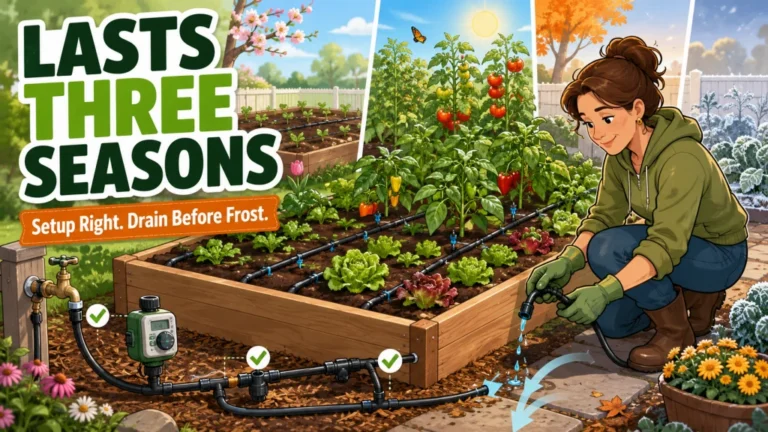
Yes, if you live anywhere that gets a hard freeze. Trapped water in fittings and tubing can crack components, so draining or disconnecting the system before the first freeze is part of the winter question that often gets skipped.
🍅 Why do tomatoes and lettuce in the same bed need different drip settings?
Soil type and root depth, not the plant name, drive the difference. A sandy mix under shallow lettuce roots dries out faster than a clay-heavy mix under deeper tomato roots, so the same run time rarely fits both well.