Raised Bed Drip Irrigation Schedule by Season: How Much to Adjust and When

Raised Bed Drip Irrigation Schedule By Season

A drip schedule that keeps raised bed vegetables healthy in July will overwater those same beds in October and can overwater young spring transplants if it is copied too early. Seasonal adjustment is not optional: soil temperature, plant size, evapotranspiration rate, and rainfall patterns all shift across the year, and the schedule needs to shift … Read more


Drip Emitter Line for Raised Beds: The Most Versatile Option and Why Most Kits Use It

Drip Emitter Line Raised Bed

Emitter dripline is the component most raised bed drip irrigation kits are built around, and once you understand why, reading any kit spec sheet gets easier. It is round polyethylene tubing with pre-installed inline emitters that release a calibrated flow rate at fixed spacing intervals. Unlike drip tape, it routes around corners, handles mixed plantings, … Read more

Raised Bed Drip Irrigation Frequency: How Often to Water and Why Every-Other-Day Is Not Always Right

Raised Bed Drip Irrigation Frequency

Watering frequency for a raised bed drip system is not a single number. Sandy or perlite-heavy mixes can lose all usable moisture within 18 hours during summer heat, making daily or near-daily sessions necessary. Clay-loam blends hold water for 48 to 72 hours, so the same every-other-day schedule that starves a sandy bed would keep … Read more

Drip Tape for Raised Beds: When the Row Crop Tool Actually Works in a Home Garden

Drip Tape For Raised Beds

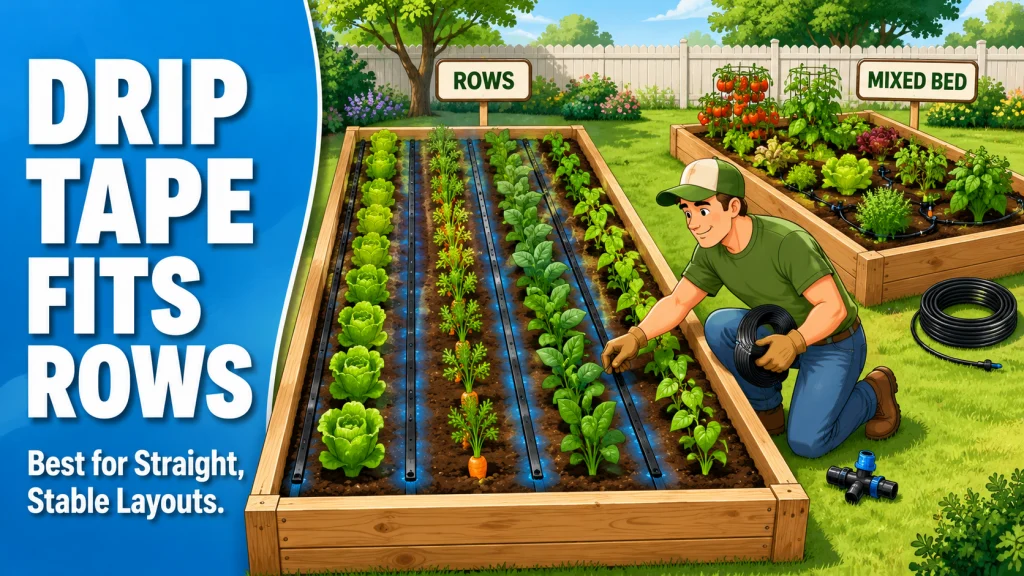
Drip tape is the standard watering method in commercial vegetable production, and it can work in a raised bed, but only under specific conditions. If you plant in straight rows and want the lowest cost per foot of drip line, drip tape is worth a close look. If you use square foot gardening layouts, mix … Read more

The Raised Bed Gardens That Are Still Running Three Seasons Later

The Raised Bed Gardens That Are Still Running Three Seasons Later

Some raised bed drip systems come out after one season. Others are still running three years later. When I look at the installs from my own work that have held up the longest, the same pattern shows up every time. It has nothing to do with which kit the homeowner bought. It has everything to … Read more