A drip schedule that keeps raised bed vegetables healthy in July will overwater those same beds in October and can overwater young spring transplants if it is copied too early. Seasonal adjustment is not optional: soil temperature, plant size, evapotranspiration rate, and rainfall patterns all shift across the year, and the schedule needs to shift with them. This article gives a percentage-based framework for adjusting run time from spring through winter, explains the specific triggers that should prompt each change, and covers the winter decision by zone so the system is not left running when it should not be.

The Schedule You Set in July Will Hurt Your Beds by September
The most common watering mistake in the second half of the growing season is inertia. The summer schedule is dialed in, the crops are growing, and the timer keeps running exactly the same way through August, September, and into October. By then the beds are getting twice as much water as they need, the root zone stays saturated between sessions, and the gardener is puzzled about why fall crops are struggling despite consistent irrigation.
The same problem runs in reverse in spring. A gardener who looks up their summer schedule from last year and programs it in March is overwatering cool, slow-draining soil into new transplants whose roots have not yet spread far enough to use what is being delivered. The schedule needs to track the season, not just the month on the calendar. For the full picture of how run time, frequency, and timer programming fit together, the raised bed drip irrigation schedule guide covers the broader setup. This article is specifically about what to change by season and by how much.

This kit includes everything needed to water a raised bed up to 4 by 8 feet, with professional-grade components built for repeated seasonal use. It features 35 feet of emitter tubing with 70 built-in, pressure-compensating emitters spaced every 6 inches for even watering near the roots, plus 25 feet of easy-to-handle 1/4 inch distribution tubing. This low-volume design can save up to 80% on water while supporting healthier plants and better yields. Installation is straightforward thanks to an illustrated manual covering multiple layout options, and the system can be automated with a compatible Rain Bird hose-end timer sold separately.
Check On AmazonIf you click this link and buy, we earn a commission at no additional cost to you.
Spring: Start Low and Ramp Up With the Temperature
In spring, soil is still cool from winter, plant root systems are shallow and establishing, and evapotranspiration rates are a fraction of what they will be in peak summer. Starting a spring drip schedule at 50 percent of the expected summer run time is the right anchor. A bed that will need 45 minutes per session in July should be running around 20 to 22 minutes per session in early spring. That is enough to keep the surface consistently moist where new roots are concentrated, without pushing excess water down through the profile where shallow roots cannot reach it.
The ramp-up signal is daytime temperature, not the calendar date. As daytime highs consistently exceed 70 degrees Fahrenheit, increase run time by 10 to 15 percent per adjustment. One adjustment every 10 to 14 days is usually the right pace. Moving too fast adds water faster than the warming soil and growing root system can use. Moving too slow leaves maturing transplants short of water during the stretch when they are putting on the most vegetative growth.
Field Note: The spring overwatering I see most often happens with gardeners who start seeds early under cover and then transplant into the beds in late March or early April. The seedlings look small and fragile, so the instinct is to water generously. But small transplants in cool soil do not drain the bed the way a full-size tomato plant does in July. Running 80 percent of the summer schedule in April consistently leads to waterlogged root zones and weak early growth.
One trigger worth watching in late spring: wilting in the early afternoon when temperatures are climbing but not yet at summer peak. Afternoon wilt during a warming spell is the clearest signal that the current spring schedule needs to move up a step. Do not wait for the weekly adjustment window if the plants are telling you the schedule is behind the heat.
Summer: Full Schedule, Right Timing
Summer is 100 percent. The full run time calculated for the bed size, soil type, emitter flow rate, and crop mix applies at peak heat. For beds with warm-season vegetables at full size, that often means total weekly watering measured in hours across multiple sessions, not a few minutes every other day. Sandy or perlite-heavy mixes in sustained heat above 90 degrees Fahrenheit may need daily or near-daily short sessions to keep the root zone from drying out between runs.
One adjustment that does not show up in most timer discussions is start time. Morning watering consistently outperforms afternoon watering in summer for two reasons. First, moisture delivered early in the day is available to the root zone before peak evapotranspiration hits around midday. Second, afternoon watering that wets foliage or bed surfaces during the cooldown period can extend the damp conditions that some fungal problems prefer. Programming a morning start time on the timer, usually between 5 and 8 in the morning, is one of the lowest-effort improvements a raised bed drip setup can make in summer.
Pro Tips: If the bed is showing consistent afternoon wilt even with the full summer schedule running, check the emitter flow rate and line spacing before increasing run time further. A layout issue, a clogged emitter, or a pressure drop from too many beds on one line will mimic the same symptoms as an underwatered schedule.

This robust hose-end timer works with sprinklers, drip irrigation, and soaker hoses, offering simple automatic programming with full 7 day scheduling for worry-free watering. An extra-large dial and readout screen make setup and schedule review easy, while one-touch buttons allow quick cancellation, a rain delay of up to 96 hours, or manual watering on demand. The display also shows the next scheduled cycle and time remaining on the current one.
Check On AmazonIf you click this link and buy, we earn a commission at no additional cost to you.
Fall: Gradual Reduction as Temperatures Drop
The fall reduction starts when daytime highs consistently drop below 70 degrees Fahrenheit. At that threshold, evapotranspiration slows, soil holds moisture longer between sessions, and the full summer schedule begins overwatering. The correct adjustment is a 20 to 30 percent reduction from the summer peak, applied gradually over 4 to 6 weeks rather than in a single step.
In Zone 6 and Zone 7, October typically calls for 60 to 70 percent of the summer schedule. A bed running 45 minutes per session in August should be down to roughly 27 to 32 minutes by mid-October. The exact number depends on what is planted: cool-season crops like lettuce, spinach, and kale are actively growing in fall and need consistent moisture, while beds that have been cleared and are resting can scale further down. Do not use a cleared bed as the reference for how much to reduce across all beds. Crop stage matters as much as air temperature in the fall adjustment.
The fall reduction is also where gardeners most often get caught by a rain pattern shift. A dry, warm September can extend summer schedule needs further into fall than expected. A wet, cool October can push the reduction faster than the zone-based calendar suggests. Watch the soil and the plants, not just the date.
Winter: The Decision Depends on Your Zone
Winter management for a raised bed drip system splits cleanly by hardiness zone. In frost-free zones, roughly Zone 9 and warmer, the system keeps running at a reduced schedule through winter. A range of 20 to 30 percent of the summer schedule is typically appropriate for overwintering crops or cover crops in those zones. Cool temperatures and shorter days drop evapotranspiration rates significantly, so a bed that needed 45 minutes per session in summer may need only 10 to 12 minutes every few days in a mild Zone 9 or 10 winter.
In Zone 7 and Zone 8, where freezes are occasional but not sustained, the winter approach is conditional. Run the system only when two conditions are both true: the soil is dry enough to need water, and the outdoor temperature is above 40 degrees Fahrenheit at the time the system would run. Programming a timer to run on a fixed schedule through a Zone 7 or 8 winter often leads to irrigation during a freeze event, which can damage fittings and tubing. Check the forecast before each run in borderline conditions, and disable the timer during freeze warnings.
In Zone 6 and below, the system should be shut down and winterized before the first hard freeze. Running drip tubing, fittings, or a hose-end timer through a sustained freeze will almost always result in cracked components. The winterization process is a separate topic from schedule adjustment and is not covered here, but the decision point is clear: once sustained below-freezing temperatures are on the forecast in Zone 6, the system comes off the hose bib.
Warning: In Zone 7 and 8, a timer left on a programmed winter schedule without weather monitoring can run during a hard freeze. Even a brief freeze event while the system is pressurized can split fittings at the mainline connection or crack the timer body. Disable or monitor the schedule during any period when overnight lows are forecast below 32 degrees Fahrenheit.
The Seasonal Percentage Framework at a Glance
The percentage approach to seasonal adjustment treats summer as the 100 percent baseline and scales other seasons relative to it. This framework aligns with how irrigation controllers in residential and commercial settings handle seasonal programs, and it translates directly to a simple battery hose-end timer by adjusting session run time rather than a controller percentage dial. Calculate the summer run time for the bed first, then apply the seasonal percentages to arrive at starting points for other seasons.
| Season | Percentage of Summer Run Time | Example: 45-min Summer Session | Notes |
|---|---|---|---|
| Spring (early, soil cool) | 50 percent | 22 to 23 minutes | Ramp up 10 to 15 percent as daytime temps exceed 70 degrees F |
| Spring (late, warming) | 65 to 80 percent | 29 to 36 minutes | Increase based on plant stage and afternoon wilt signals |
| Summer (peak) | 100 percent | 45 minutes | Full calculated run time; morning start preferred |
| Fall (early, temps 65 to 70 F) | 75 to 80 percent | 34 to 36 minutes | Reduce gradually as nights cool |
| Fall (mid, temps below 65 F) | 60 to 70 percent | 27 to 32 minutes | Zone 6 to 7 typical October range |
| Winter (Zone 9 to 10, frost-free) | 20 to 30 percent | 9 to 14 minutes | Conditional on soil dryness and crop presence |
| Winter (Zone 7 to 8, occasional freeze) | 0 to 20 percent or off | 0 to 9 minutes | Run only above 40 degrees F; disable during freeze warnings |
| Winter (Zone 6 and below) | 0 percent (system off) | System winterized | Shut down before first hard freeze |
These percentages are starting points, not rigid targets. Beds planted with actively growing cool-season crops in fall will need to stay closer to the higher end of the fall range. Beds that have been cleared and are resting can scale further down. The table gives the frame; the plant signals and the soil probe confirm whether the adjustment is right.
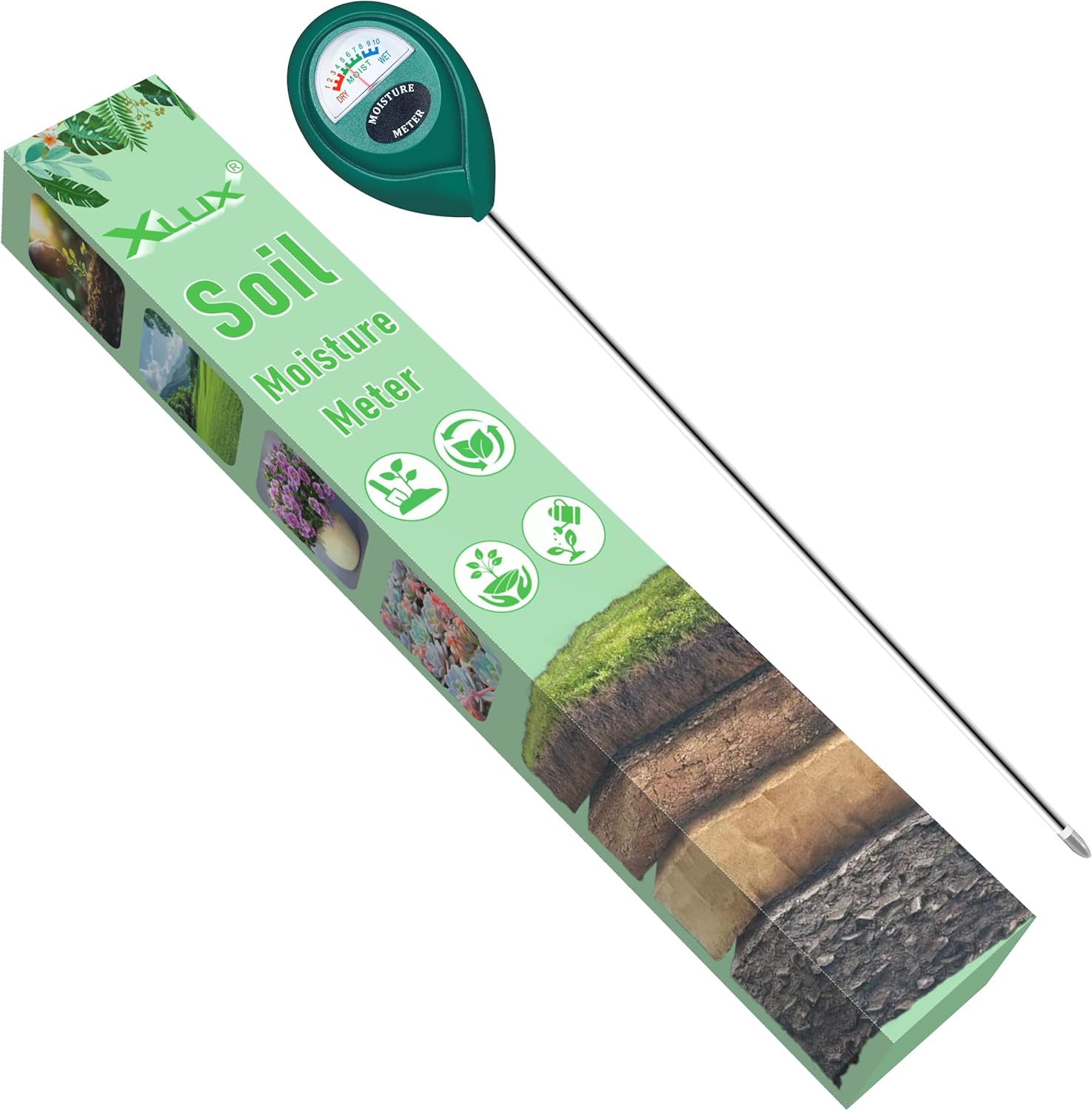
This moisture meter measures soil conditions deep inside pots and gardens with a probe 5.5 inches longer than standard styles, ideal for larger or deeper containers. Simply insert it into the soil for an immediate reading on the large, easy-to-read dial, which shows three zones across ten scales. Its single probe design causes less root disturbance than double or multiple probe meters. For best results, avoid testing hard soil or liquids, and remove the probe within 5 minutes to prevent corrosion of the metal tip.
Check On AmazonIf you click this link and buy, we earn a commission at no additional cost to you.
Plant Signals Override the Percentage Schedule
The percentage framework is a starting point. Plant behavior is the override. Two signals are worth building into the routine regardless of what season it is or what percentage the schedule is currently running at.
Wilting before the next scheduled watering session is the clearest increase signal. If plants are visibly stressed before the timer runs, the current schedule is not keeping up with the bed’s demand. Increase run time by 10 to 15 percent and check again in a few days. Do not wait for the next scheduled review window when the plants are already showing stress. Afternoon wilt on a very hot day can be heat stress rather than water stress, but if the same plants are also wilted in the morning before the heat builds, the schedule needs to move up.
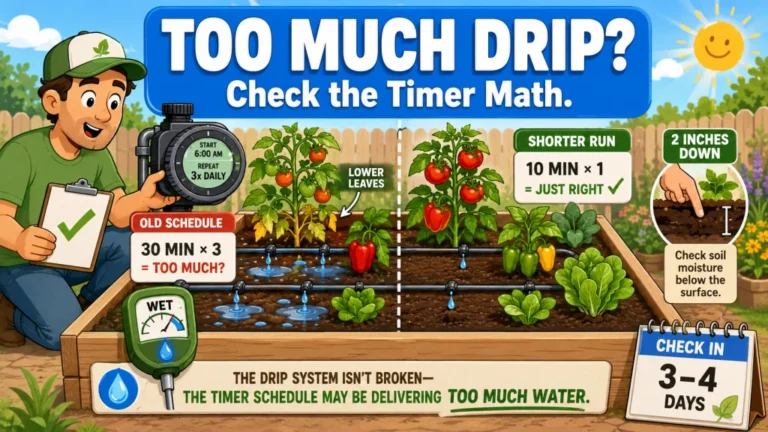
Soil that is still visibly wet or saturated at the next scheduled run time is the clearest decrease signal. Push a finger or a probe 3 to 4 inches into the bed before the timer runs. If the soil is wet and has not had time to drain between sessions, reduce run time by 15 to 20 percent or remove one session per week. Keeping a saturated root zone running on a fixed schedule into cooler weather is the most common cause of root problems in fall raised beds.
- Morning wilt that does not recover by midday: increase run time by 10 to 15 percent immediately
- Afternoon wilt only, plants recover by evening: monitor for 2 to 3 days before adjusting; may be heat stress, not water stress
- Soil wet 1 to 2 inches down at next scheduled run: reduce frequency by one session per week before reducing run time
- Soil saturated with a sour or stale smell at 4 inches: reduce both run time and frequency; check emitter drainage and bed drainage as well
- Soil dry and powdery at 4 inches 12 hours after watering: increase frequency first, then run time if frequency alone does not resolve it
These signals work across all seasons. In spring, wilting is less common and saturation is more common. In summer, the reverse is typical. In fall, saturation becomes the primary risk again as evapotranspiration drops faster than most gardeners adjust their schedules.

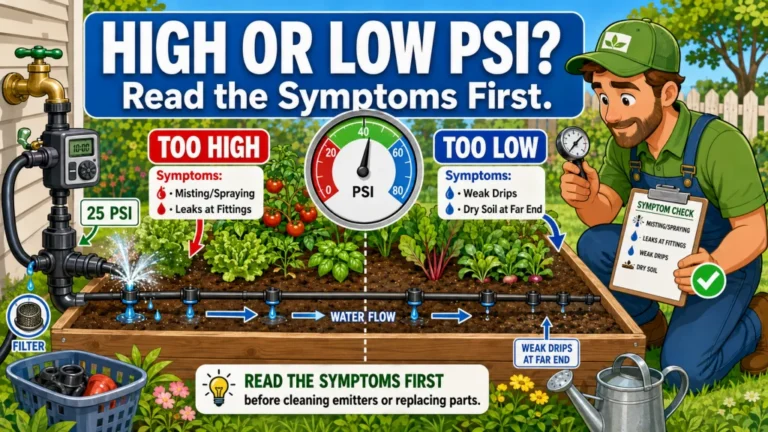
This pressure regulator maintains an optimal 25 PSI to keep drip lines and emitters running at consistent flow, with a 20 gallon per minute capacity to support larger systems. It connects to any 3/4 inch male threaded faucet, garden hose, or component for easy setup. Built from UV and chemical-resistant materials, it offers durable, reliable performance season after season, and pairs well with a compatible Rain Bird hose-end timer for automated watering.
Check On AmazonIf you click this link and buy, we earn a commission at no additional cost to you.
Final Thoughts: Two Adjustments a Year Is the Minimum
Most raised bed gardeners who water by hand adjust instinctively as the season changes. The drip timer does not. Once it is programmed, it runs the same schedule until someone changes it. The single most useful habit to build around a raised bed drip system is a twice-yearly schedule review: once in spring when nighttime lows are consistently above 50 degrees Fahrenheit and once in fall when daytime highs start dropping below 70. Those two adjustments alone prevent the majority of seasonal overwatering and underwatering problems I see.
Build the percentage framework into the timer review: confirm the summer baseline, then scale down for fall, back up for late spring, and make the winter decision by zone. The plant signals fill in the gaps between reviews. If something looks wrong, the soil probe confirms it in 30 seconds.
For a complete reference on raised bed drip system setup, including pressure regulation, filtration, layout, and component selection, the raised bed drip irrigation tips guide covers the full system. And for how run time, frequency, and timer programming connect into a working weekly schedule, the raised bed drip irrigation schedule guide is the right starting point before applying seasonal adjustments.
FAQs
🌸 When should I start reducing my drip schedule in fall?
Start reducing when daytime highs consistently drop below 70 degrees Fahrenheit. That is usually the point where evapotranspiration slows enough that the full summer schedule begins overwatering. Reduce by 20 to 30 percent from the summer peak and make the adjustment gradually over 4 to 6 weeks rather than cutting back all at once.
🌱 What percentage should I run my drip system in spring?
Start early spring at about 50 percent of the expected summer run time. Increase by 10 to 15 percent as daytime highs consistently exceed 70 degrees Fahrenheit. By late spring, most beds with warm-season transplants will be at 65 to 80 percent of the summer schedule before reaching full summer levels.
❄️ Should I run drip irrigation in winter for raised beds?
It depends on the zone. In Zone 9 and warmer, run at 20 to 30 percent of summer schedule if crops are present. In Zone 7 to 8, run conditionally: only when soil is dry and temperature is above 40 degrees Fahrenheit, and disable during freeze warnings. In Zone 6 and below, shut the system down and winterize before the first hard freeze.
🥵 My plants are wilting even though the timer is running. What does that mean?
Morning wilt that does not recover by midday usually means the schedule is not keeping up with demand. Increase run time by 10 to 15 percent. If afternoon wilt recovers by evening, it may be heat stress rather than water stress. Check the soil at 4 inches: if it is dry, add water. If it is moist, give the plants a couple of days before adjusting the schedule.
🍂 How much should I cut back drip irrigation in October?
In Zone 6 to 7, October typically calls for 60 to 70 percent of the summer schedule. A 45-minute summer session would drop to roughly 27 to 32 minutes by mid-October. Beds with active cool-season crops stay closer to the higher end. Cleared or resting beds can scale further down. Use the soil probe to confirm the reduction is right for the beds you have planted.
⏰ How often should I review and adjust the drip timer schedule?
A minimum of twice a year: once in spring when nights stay consistently above 50 degrees Fahrenheit, and once in fall when daytime highs drop below 70. Between reviews, watch for wilting before the next scheduled run (increase signal) or soil still wet at run time (decrease signal). Those two plant signals should prompt an adjustment any time they appear.