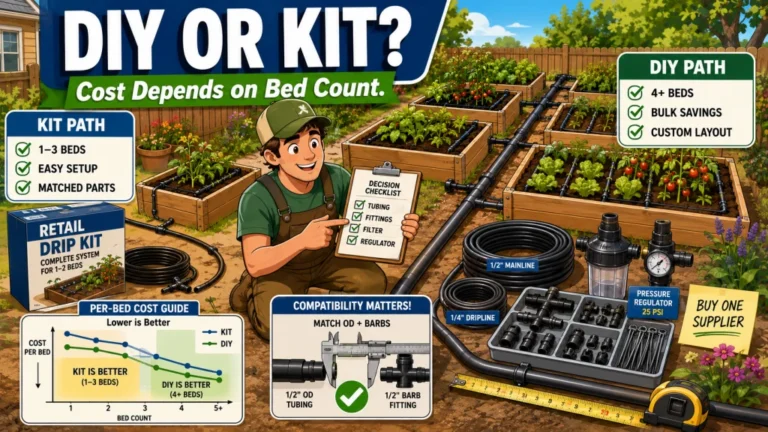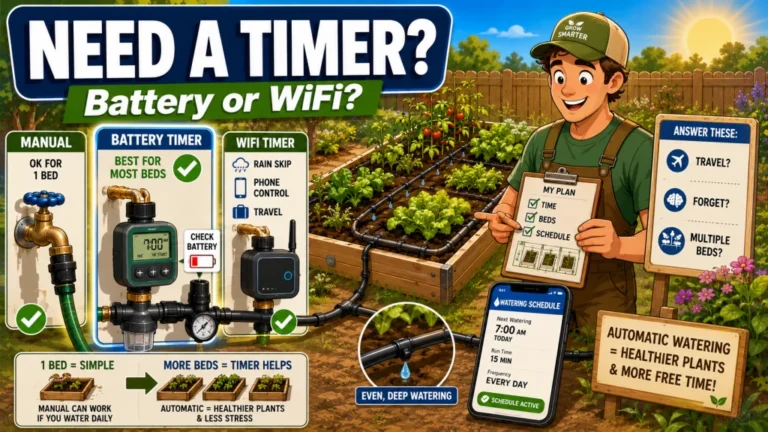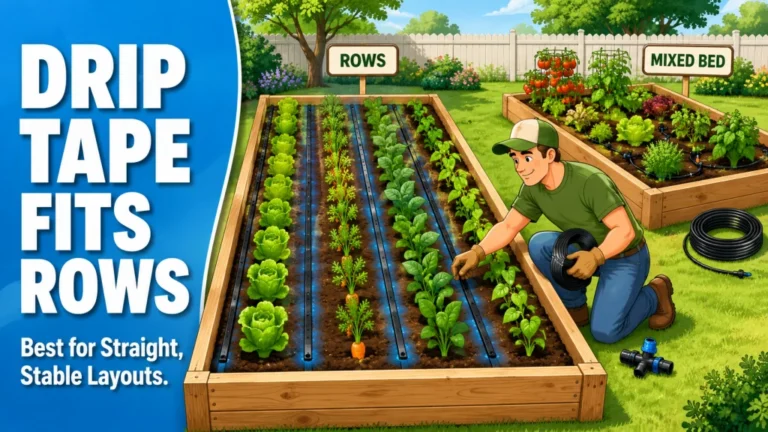
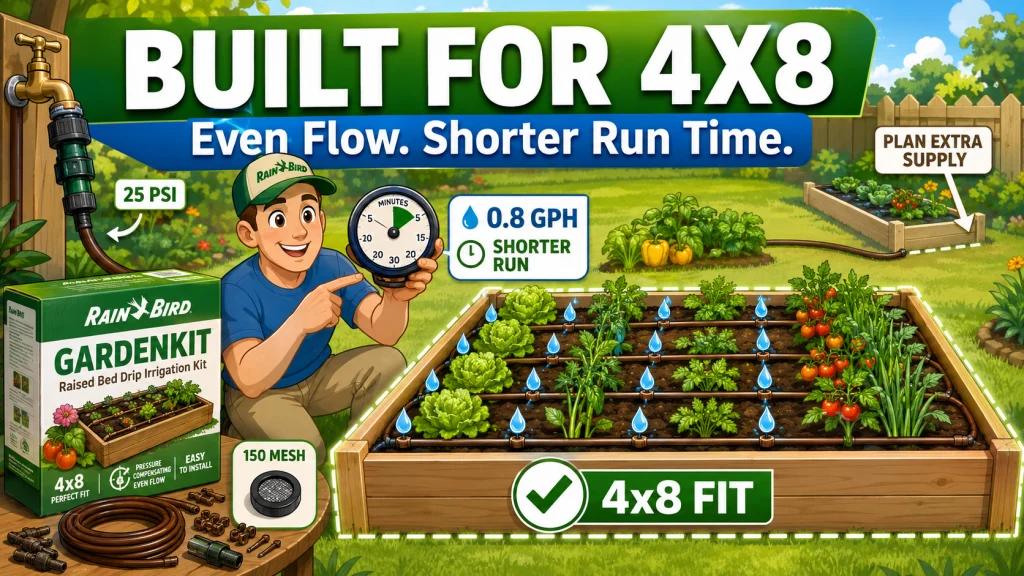
The Rain Bird GARDENKIT is designed for exactly one job: water a single 4×8 raised bed. The kit includes 35 feet of 1/4-inch emitter tubing with 70 pressure-compensating emitters spaced every 6 inches, 25 feet of distribution tubing, a 25 PSI pressure regulator, a 150-mesh filter washer, and all the fittings needed to connect at the hose bib. If your bed is 4×8 and you want Rain Bird build quality with pressure-compensating emitters that deliver even flow from the first emitter to the last, this kit does that well. Where it asks more of you is when the bed size or layout does not match what the kit is built around, or when you want to water more than one bed without buying additional components.
One Kit, One Bed: What That Actually Means
Most raised bed drip reviews online cover specs without explaining what the specs mean for a real garden setup. The Rain Bird GARDENKIT has a straightforward scope: it is built for a single 4×8 raised bed, which works out to 32 square feet of coverage. If your bed is that size, the kit is genuinely well matched. If your bed is a 4×12, or you have two 4×4 beds, or you want room to expand without starting over, the picture changes quickly and the kit’s packaging does not tell you that.
I have worked with this kit and watched gardeners make the same two mistakes with it: trying to extend the emitter tubing past what the kit is designed to run, and setting a timer schedule based on other drip kit guides without accounting for the higher emitter flow rate here. Both of those are solvable if you know about them before you install. That is what this review is for.
What the GARDENKIT Includes and What Each Part Does
The kit ships with one 35-foot coil of 1/4-inch emitter tubing containing 70 pressure-compensating emitters at 6-inch spacing, one 25-foot coil of 1/4-inch black distribution tubing, a 3/4-inch faucet-to-1/4-inch adapter with a 25 PSI pressure regulator built in, a 150-mesh filter washer, ten barbed coupler fittings, ten elbow fittings, ten end cap plugs, and ten tubing stakes. The instruction manual is illustrated and shows several layout patterns for different bed configurations, which is genuinely useful for a first-time installer.
A few things worth noting before you open the box. The kit does not include a backflow preventer. If your hose bib does not already have one, you will want to add it separately before the pressure regulator. The 25 PSI regulator is built into the faucet adapter rather than being a separate component, which simplifies the head assembly and reduces one connection point where leaks can develop. The 150-mesh filter washer sits inside the adapter and provides real filtration, finer than the 60-mesh screen built into the DIG ML50’s swivel adapter. For most gardeners on municipal water, either filter is adequate, but the 150-mesh gives a margin of confidence on water quality without any extra cost or parts.
| Component | Spec | What it means for your bed |
|---|---|---|
| Emitter tubing | 35 ft, 70 emitters at 6-inch spacing | Dense coverage; good for greens and herbs, plenty for tomatoes and peppers at normal spacing |
| Emitter flow rate | 0.8 GPH, pressure-compensating | Higher than DIG ML50’s 0.52 GPH; run times need to be shorter or overwatering becomes a real risk |
| Distribution tubing | 25 ft, 1/4-inch black | Runs from the hose bib to the bed; enough for most single-bed setups within 25 feet of the faucet |
| Pressure regulator | 25 PSI, built into faucet adapter | Integrated design means one fewer connection to leak; correct sizing for 1/4-inch emitter tubing |
| Filter washer | 150-mesh, inside the faucet adapter | Finer than many included filters at this price; reduces clogging risk in the emitter tubing |
| Backflow preventer | Not included | Add separately if your hose bib does not already have one |
The pressure-compensating emitters are the component that genuinely sets this kit apart from entry-level options. In a non-compensating emitter line, pressure drops along the run mean the emitters farthest from the supply end deliver less water than the ones near the faucet connection. Over a short run in a 4×8 bed that difference is small, but it is real, and it shows up as slightly drier soil near the end of the line after a few weeks. Pressure-compensating emitters use a small internal diaphragm that adjusts output to maintain consistent flow regardless of where they sit on the line. In a single 4×8 bed, the consistency benefit is modest but measurable, especially on a bed of mixed greens where every foot of row is planted.

This commercial-grade pop-up spray head features a 2-inch pop-up height, a heavy-duty stainless steel retraction spring, and a patented pressure-activated co-molded wiper seal that prevents water leakage around the stem. A pre-installed orange flush cap keeps the head protected after flushing and can be replaced with any Rain Bird MPR spray nozzle. The tapered pop-up neck aids smooth retraction every cycle.
Check On AmazonIf you click this link and buy, we earn a commission at no additional cost to you.
Where the GARDENKIT Does Its Job
For a gardener with one 4×8 bed who wants a complete, low-maintenance drip setup and is willing to spend a bit more for Rain Bird’s component quality, this kit is a strong fit. The emitter tubing feels closer to Rain Bird’s stronger drip components than the thin tubing found in many budget kits, and the 150-mesh filter gives you a real layer of protection against clogging without needing to buy a separate filter. Rain Bird builds commercial irrigation components, and the GARDENKIT feels closer to that sturdier category than many thin-budget kits. It matters in a raised bed where the tubing sits in direct sun from planting to harvest.
The 6-inch emitter spacing is denser than many competing kits at this price. For a bed packed with lettuce, spinach, basil, or other greens in close rows, that spacing means each plant is always within a few inches of an emitter. I have seen sparser spacing, 9 or 12 inches, leave visible dry strips between rows of greens once the plants fill in and the soil surface becomes harder to read. At 6 inches, the moisture zones in the loose raised bed mix overlap enough that coverage stays consistent across the full width of the bed.
Field Note: The most consistent feedback I hear from gardeners who switch from hand-watering to the GARDENKIT is that the emitter tubing’s brown color blends into the soil surface in a way that black tubing does not. That is a minor thing on paper, but in practice it means the drip layout is less visible under plant canopy and feels less like a tangle of hardware in the garden. It is an aesthetic point, not a functional one, but it matters to people who spend time in the bed.
The instruction manual is better than average for a kit in this category. It includes illustrated layout diagrams for several bed configurations, not just the standard 4×8 grid, including options for longer narrow beds and setups with distribution tubing running down the center rather than along one edge. For a first-time drip installer, that flexibility in the instruction manual reduces the time spent guessing at the layout before cutting and connecting tubing.

This kit includes everything needed to water a raised bed up to 4 by 8 feet, with professional-grade components built for repeated seasonal use. It features 35 feet of emitter tubing with 70 built-in, pressure-compensating emitters spaced every 6 inches for even watering near the roots, plus 25 feet of easy-to-handle 1/4 inch distribution tubing. This low-volume design can save up to 80% on water while supporting healthier plants and better yields. Installation is straightforward thanks to an illustrated manual covering multiple layout options, and the system can be automated with a compatible Rain Bird hose-end timer sold separately.
Check On AmazonIf you click this link and buy, we earn a commission at no additional cost to you.
Where the GARDENKIT Falls Short
The 0.8 GPH Flow Rate and What It Means for Your Timer
This is the detail that causes the most confusion for gardeners coming from other drip kits or from online watering schedule guides. The GARDENKIT’s emitters run at 0.8 GPH. The DIG ML50’s emitters run at 0.52 GPH at 15 PSI. That difference, roughly 54 percent more water per emitter per hour in the Rain Bird kit, means the two systems cannot share the same timer schedule and deliver the same amount of water to the bed.
A gardener who installs the GARDENKIT and then follows a schedule designed for a lower-flow kit is going to overwater the bed. For a 4×8 bed of tomatoes in a well-draining raised bed mix, overwatering for a few weeks shows up as yellowing lower leaves, root zone saturation, or soil that stays wet when it should be drying out between cycles. The fix is straightforward: run the GARDENKIT for shorter cycles than you would a 0.52 GPH kit, or water less frequently. The math is simple once you know the flow rate difference exists. The problem is that most schedule guides online do not mention which kit they were written for, so the flow rate mismatch stays invisible until the bed shows signs of stress.
Setting the same 30-minute daily schedule a neighbor uses with a lower-flow kit. The GARDENKIT’s 0.8 GPH emitters will deliver more water in those 30 minutes than the bed needs, leaving the root zone saturated.
Starting with shorter cycles, around 15 to 20 minutes every two to three days for most raised bed soil mixes, then adjusting based on how the soil surface and plants respond. The higher emitter flow rate means the bed reaches field capacity faster than with lower-flow alternatives.
Coverage Boundary and Expansion
The GARDENKIT covers one 4×8 bed. Amazon’s own product listing includes a note directly stating not to extend the kit by adding additional 1/4-inch tubing, because reduced water flow will result. That is the same hydraulic limitation that affects any 1/4-inch emitter line: too many emitters on one run reduces pressure to each emitter and uneven coverage follows. For a second bed, the safer approach is a second kit or a separate supply branch, rather than daisy-chaining the 1/4-inch emitter tubing end-to-end.
For a gardener with a single 4×8 bed, this is not a limitation in practice. For a gardener who is starting with one bed and planning to expand later, it is worth knowing before the system is in the ground. A planned multi-bed setup needs 1/2-inch mainline tubing run to each bed with each kit connecting separately, not 1/4-inch distribution tubing bridging from one kit to the next. Before expanding, compare the options in the raised bed kit guide.
Pro tip: The kit includes 25 feet of 1/4-inch distribution tubing for the run from the hose bib to the bed. If the hose bib is more than 25 feet from the bed, you will need additional distribution tubing before the run even reaches the bed. Measure the distance before buying so you know what to add, rather than discovering the shortage mid-install.
Tubing Stiffness Out of the Box
Both the emitter tubing and the distribution tubing coil tightly in packaging and arrive stiff, especially in cool weather. Multiple Home Depot reviews mention the coiled emitter tubing being difficult to work with straight out of the box. Rain Bird’s own instruction manual acknowledges this and recommends leaving the tubing in direct sun for an hour before installation. That advice is accurate and it works, but it is a step first-time installers often skip and then blame the fittings when the tubing springs back or resists the barbed connections.
The distribution tubing specifically, the black 1/4-inch line, is stiffer than some competing brands. In a short run from the hose bib to a raised bed it is not a significant issue, but if you need to make tight turns or work the tubing around a corner, warming it first is more than a suggestion. I have seen gardeners force a barbed elbow fitting into cold tubing and crack the fitting. With warm tubing, the connection seats without any fighting.

This professional-grade poly tubing features a micro-porous design that creates a tight connection to fittings and resists kinking, chemicals, algae growth, and UV damage without requiring any maintenance. The self-dispensing coil speeds up layout, and the tubing connects to any standard faucet, garden hose, or existing underground sprinkler head with the appropriate Rain Bird conversion kit. Compatible with Rain Bird half-inch universal barbed or Easy Fit compression fittings and stakes, sold separately.
Check On AmazonIf you click this link and buy, we earn a commission at no additional cost to you.
GARDENKIT vs. DIG ML50: Which One Is Right for Your Setup
These two kits occupy the same price range and are frequently compared by gardeners choosing a first raised bed drip system. The decision comes down to bed size, emitter type, and whether expandability matters in the near term.
The DIG ML50 is the more flexible option. It covers up to 150 square feet across up to five 10-foot dripline runs, which means it fits a wider range of bed sizes and layouts than the GARDENKIT. If you have a 4×12 bed, a non-standard layout, or multiple beds that you want to feed from one mainline with additional 1/2-inch tubing, the ML50’s design accommodates that. Its emitters run at 0.52 GPH at 15 PSI, which is a lower flow rate that gives you more room for timer error without overwatering. The tradeoff is that the ML50 uses non-compensating emitters, meaning flow can vary slightly across the run depending on where in the line each emitter sits.
The GARDENKIT is the better choice when the bed is exactly 4×8, when you want pressure-compensating emitters for consistent end-to-end flow, and when you are not planning to expand beyond one bed in the same season. The 6-inch emitter spacing is denser than the ML50’s 9-inch spacing, which is an advantage for beds planted tightly with greens or herbs where every inch of row gets watered. The higher flow rate per emitter requires more attention to run time, but for a gardener who knows the kit’s specs, that is a manageable adjustment rather than a real limitation.
For a side-by-side look at both kits and other options by bed count and setup type, the DIG ML50 review covers the same scope from the ML50 side, and the full raised bed drip kit comparison puts both kits in context with other options across bed count, budget, and emitter type.
Who This Kit Is Right For
The GARDENKIT is a strong fit for a gardener with a single 4×8 raised bed who wants pressure-compensating emitters, a finer built-in filter than most entry-level kits include, and Rain Bird component quality without sourcing parts individually. If the 4×8 bed is the permanent setup and expansion is not a near-term plan, the kit delivers consistent coverage season after season with minimal maintenance.
It is not the right kit for beds other than 4×8 without adjusting the layout significantly. A 4×4 bed has more emitters than it needs at 6-inch spacing across the full 35-foot coil. A 4×12 bed is too long for the kit’s emitter tubing and would need a separate supplemental run. A gardener with two or more beds needs each kit connected independently to a separate supply line, which adds complexity and cost that a purpose-built multi-bed setup would handle more cleanly.
- Good fit: One 4×8 raised bed, vegetables or herbs, first drip setup, preference for Rain Bird component quality.
- Good fit: Gardener who wants pressure-compensating emitters for consistent end-to-end watering without buying separate components.
- Good fit: Dense plantings of greens where 6-inch emitter spacing provides thorough coverage across every row.
- Not a good fit: Beds significantly larger or smaller than 4×8, where the emitter tubing length either falls short or provides far more than the bed needs.
- Not a good fit: Multiple beds without a plan for independent supply lines to each kit.
- Not a good fit: Gardeners who are running a lower-flow kit’s timer schedule and do not realize the 0.8 GPH emitters require shorter run times.
Before You Buy: Four Questions Worth Answering
The GARDENKIT works well when the setup matches what it is designed for. These four questions will tell you quickly whether that match exists.
- Is your bed 4×8? That is the target coverage. Larger beds will need supplemental tubing; smaller beds will have more emitter tubing than needed.
- Is your hose bib within 25 feet of the bed? The kit includes 25 feet of distribution tubing. Measure before buying if the distance is close.
- Does your hose bib already have a backflow preventer? The GARDENKIT does not include one. Add it separately if needed.
- Are you planning to run the same schedule as another kit you have read about? The 0.8 GPH emitters deliver water faster than lower-flow kits. Start with shorter, less frequent cycles and adjust from there.
Note: The box does not include everything some gardeners expect. Before buying, account for: a hose-end timer if you want automated watering (sold separately); a backflow preventer if your hose bib does not already have one; additional 1/4-inch distribution tubing if the hose bib is more than 25 feet from the bed; and 1/2-inch mainline tubing if you are planning a multi-bed layout where each kit needs its own supply branch.
If the four questions above check out and you know what to add beyond the box, the GARDENKIT will run reliably with minimal adjustment after the initial setup.

This flexible poly tubing has an outside diameter of 0.25 inches and inside diameter of 0.17 inches, rated for 0 to 70 psi, and works as a main line in small drip systems or as a branch line off larger half-inch supply tubing. A micro-porous design creates tight connections to fittings, and a textured finish speeds up handling and installation. Kink-free and resistant to chemicals, algae, and UV damage, it is compatible with most brands of quarter-inch barbed fittings, spot emitters, micro-bubblers, and misters for both above-ground and buried use.
Check On AmazonIf you click this link and buy, we earn a commission at no additional cost to you.
Final Thoughts: A Focused Kit That Earns Its Price
The Rain Bird GARDENKIT is not trying to be flexible, and that is not a criticism. Within the scope it is built for, it delivers better component quality than most kits at this price: a 150-mesh filter washer, an integrated pressure regulator that eliminates one potential leak point, and pressure-compensating emitters that keep flow consistent from end to end of the bed. Those are real advantages for a gardener who wants a setup that stays reliable through a full season without much fussing.
The two things to know before installing: warm the tubing in the sun before connecting fittings, and start with shorter run times than guides written for lower-flow kits suggest. Handle both upfront and the setup goes smoothly. Miss either one and the first session in the garden is harder than it should be.

This robust hose-end timer works with sprinklers, drip irrigation, and soaker hoses, offering simple automatic programming with full 7 day scheduling for worry-free watering. An extra-large dial and readout screen make setup and schedule review easy, while one-touch buttons allow quick cancellation, a rain delay of up to 96 hours, or manual watering on demand. The display also shows the next scheduled cycle and time remaining on the current one.
Check On AmazonIf you click this link and buy, we earn a commission at no additional cost to you.
FAQs
🌱 Is the Rain Bird GARDENKIT only for 4×8 raised beds?
That is its designed coverage: 32 square feet, matching a standard 4×8 bed. It can be configured for other layouts, but the emitter tubing length and fitting count are sized for that bed. Significantly larger or smaller beds will either run short on tubing or have more than needed. The instruction manual includes layout diagrams for a few configurations, but the 4×8 is the baseline the kit is built around.
💧 What is the emitter spacing and flow rate in the GARDENKIT?
The 35-foot emitter tubing coil contains 70 pressure-compensating emitters spaced every 6 inches, each rated at 0.8 GPH. That is a denser spacing and a higher flow rate per emitter than many entry-level raised bed kits. The pressure-compensating design helps all 70 emitters maintain more consistent flow from the first emitter to the last.
⏱️ How long should I run the GARDENKIT timer each cycle?
Start shorter than you think necessary: 15 to 20 minutes every two to three days is a reasonable starting point for most raised bed soil mixes. The 0.8 GPH emitters deliver water faster than lower-flow alternatives, so schedules designed for other kits will overwater the bed if applied directly. Check soil moisture at 2 to 3 inches below the surface after a few cycles and adjust run time or frequency from there.
🔄 Can I connect two GARDENKIT kits together to cover two raised beds?
Rain Bird’s product listing explicitly advises against extending the kit by adding additional 1/4-inch tubing, because reduced flow results. For two beds, connect each kit independently to the water supply through a separate distribution line run to each bed. Daisy-chaining the kits end-to-end overloads the 1/4-inch line and leaves the far bed underwatered.
🔍 Does the GARDENKIT include a backflow preventer?
No. The faucet adapter includes a 25 PSI pressure regulator and a 150-mesh filter washer, but no backflow preventer. If your hose bib does not already have one built in, add a separate backflow preventer between the faucet and the kit’s adapter. It is a small addition that protects your household water supply from contamination.
🌞 Why is the emitter tubing so stiff when I open the box?
Poly tubing coils tightly in packaging and stiffens further in cool temperatures. Rain Bird’s own manual recommends leaving the tubing in direct sun for about an hour before installation. That is enough time to make it noticeably more flexible and easier to work with barbed fittings. Forcing the tubing cold is the most common source of fitting difficulty with this kit.
❄️ Do I need to winterize the GARDENKIT before freezing weather?
Yes, in any region with freezing temperatures. Disconnect the faucet adapter, drain the distribution and emitter tubing completely, and store the adapter assembly indoors. Water trapped in the fittings and pressure regulator can freeze and crack the components. The emitter tubing itself can usually survive a light frost if drained, but the plastic fittings and the regulator housing are not freeze-rated.