Most raised bed drip kit comparison articles rank the same products for every garden. The kit that installs cleanly on a single 4×8 tomato bed is not the kit that handles a five-bed mixed vegetable garden, and the one that works at the entry-level price point for one or two beds stops making sense at four beds. This comparison matches specific kits to specific situations: bed count, crop type, and budget, using field-based observations of how each product actually performs rather than general quality scores.
The sections below cover DIG, Rain Bird, DripWorks, Bootstrap Farmer, and the DIY vs kit decision. Each situation has a dedicated review section with the full breakdown. Use this page to find your situation first, then follow through to the comparison that applies.
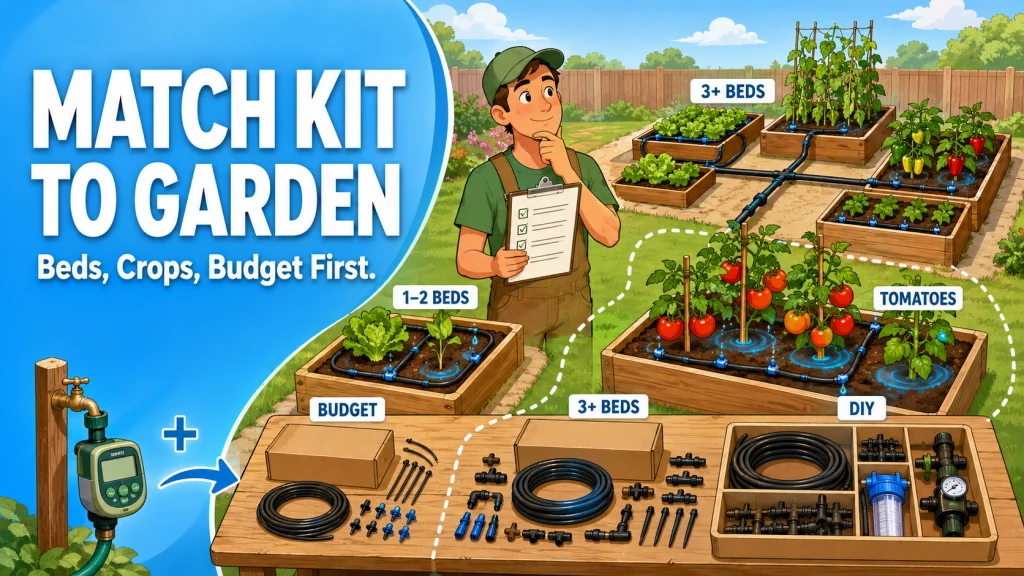
Why Generic Kit Rankings Do Not Help Raised Bed Gardeners
The raised bed drip irrigation kit comparison articles that dominate search results share a common problem: they recommend the same two or three kits regardless of how many beds the reader has, what they grow, or what their hose bib pressure runs. That approach works for the reviewer but not for the gardener standing in the yard trying to decide between a DIG ML50 and a Rain Bird GARDENKIT with one bed, or between a DripWorks packaged kit and a DIY build with five beds.
What actually separates these kits is not overall quality. It is fit: emitter flow rate, mainline diameter, pressure regulator rating, how many beds the kit was designed to cover, and whether the fittings hold up when you add a second or third bed. A kit with 0.5 GPH emitters and one rated at 1 GPH cost about the same and look similar in the box, but they are not on the same timer schedule once installed. That difference compounds once you start adding beds, crop types, and a timer to the system.
This page organizes the comparison by garden situation rather than by brand ranking. Find the situation that matches your setup and follow through to the dedicated review for that comparison.
Five Kit Choices That Usually End in Buyer Regret
Before brand matters, a few common purchase patterns in this niche reliably lead to regret. These are not about choosing the wrong brand. They are about choosing the wrong kit category for the garden situation.
- Choosing a kit because it is cheap, when you have three or more beds. Entry-level consumer kits are designed for one or two beds. At three beds, pressure drops and dry spots follow. The savings disappear when you replace the setup mid-season.
- Buying a kit with fixed low-flow emitters when tomatoes are the main crop. Fixed 0.5 GPH emitters require very long run times for a peak-summer tomato plant. Adjustable or 1 GPH emitters give more control without adding complexity.
- Choosing drip tape for a bed with mixed vegetables at irregular spacing. Drip tape delivers water in a uniform line, not at individual plant positions. Emitter tubing with point-source emitters fits irregular layouts better.
- Chaining multiple consumer kits instead of using a shared mainline. Each kit ships with its own pressure regulator and filter. Running three from one hose bib creates pressure inconsistency across the beds. A single mainline with one regulator usually costs less and performs better.
- Comparing brands before settling bed count and line type. A well-matched Rain Bird setup outperforms a poorly matched DIG setup in the same garden. Brand matters less than fit.
Each of these wrong-direction choices is avoidable with the right comparison upfront. The sections below are organized around the decisions that matter most for each garden situation.
Settle the System Type Before Comparing Kits
Before brand matters, system type matters. Drip tape and emitter tubing behave differently in raised beds, and not every kit gives you a choice between them. DIG kits typically ship with emitter tubing. DripWorks sells both configurations. Bootstrap Farmer leans toward drip tape for row-crop setups. If you pick a kit with the wrong line type for your bed layout or soil mix, the brand comparison becomes irrelevant.
Drip tape delivers water in a uniform line along the bed, which works well for dense row crops like lettuce and spinach but can underdeliver at individual plant root zones for larger vegetables. Emitter tubing with individual emitters gives you more placement control at the cost of more fittings and a more involved layout. In clay-heavy raised bed mix, both types work but emitter placement matters more because water moves slowly. In a fast-draining sandy mix, drip tape can work well if the runs are short enough to maintain pressure at the far end.
If the drip tape vs emitter tubing decision is not settled yet, the comparison on drip tape vs soaker hose for raised beds walks through the differences in detail before you spend money on a kit with the wrong line type. A broader overview of how pressure regulation, filtration, and bed count fit together across kit categories is in the section on choosing a raised bed drip irrigation kit.

This kit includes everything needed to water a raised bed up to 4 by 8 feet, with professional-grade components built for repeated seasonal use. It features 35 feet of emitter tubing with 70 built-in, pressure-compensating emitters spaced every 6 inches for even watering near the roots, plus 25 feet of easy-to-handle 1/4 inch distribution tubing. This low-volume design can save up to 80% on water while supporting healthier plants and better yields. Installation is straightforward thanks to an illustrated manual covering multiple layout options, and the system can be automated with a compatible Rain Bird hose-end timer sold separately.
Check On AmazonIf you click this link and buy, we earn a commission at no additional cost to you.
DIG ML50 vs Rain Bird GARDENKIT: The One or Two-Bed Decision
These are the two kits most raised bed gardeners see first at Home Depot, and they are priced for a one- or two-bed setup. They are not interchangeable. The differences in emitter flow rate, mainline coverage, and fitting quality show up in specific ways depending on bed size and what you grow.
The DIG ML50 is built around 1/4-inch emitter tubing with adjustable emitters and a wider coverage range. It handles a single 4×8 bed reliably and can be extended with additional tubing. In beds with tomatoes, peppers, or squash, the flow rate and emitter adjustability give more control over root zone delivery. The Rain Bird GARDENKIT is more compact, aimed at smaller setups, and has a lower per-emitter flow rate. In a 4×4 bed with shallow-rooted crops like lettuce or herbs, the Rain Bird installs more cleanly and is easier to tune. In a larger bed with high-demand crops, the lower flow rate means longer run times or uneven delivery at the far end of the line.
The timer math between these two kits is where most one-bed gardeners get tripped up. A DIG setup at 1 GPH per emitter and a Rain Bird setup at 0.5 GPH per emitter need different run times to deliver the same water volume, even if they are on the same hose bib and the same timer. If you are running both configurations, or planning to add a second bed with a different kit, the schedules have to be calculated separately. The full comparison with specific bed size recommendations is in the review for DIG ML50 raised bed drip kit and the review for Rain Bird GARDENKIT raised bed setup.

This kit is custom designed for uniform watering in 8 by 5 foot raised vegetable and garden beds, with everything needed for setup included. It comes with up to six 1/4 inch driplines, each up to 8 feet long, delivering water directly to plant roots to minimize evaporation and ensure even coverage. No additional tools or expertise are required for installation, and the system is easily expandable as your garden grows. High-quality components are built for long-lasting, reliable performance season after season.
Check On AmazonIf you click this link and buy, we earn a commission at no additional cost to you.
When You Have More Than Two Beds
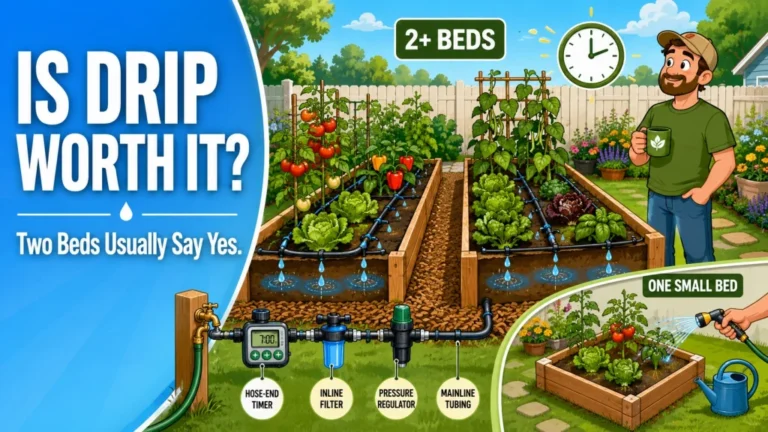
Neither the DIG ML50 nor the Rain Bird GARDENKIT was designed to run three or more beds from a single hose connection without a mainline upgrade. Chaining kits together is possible, but pressure drops along the line as emitter count increases, and the connection points between kits are usually the weakest fittings in the whole setup. What looks fine on two beds starts showing dry spots at the third.
At three or more beds, the practical path is a 1/2-inch mainline running the length of the garden with individual drip lines dropping off it, one pressure regulator at the hose bib, and one filter at the inlet. This is how a DripWorks multi-bed kit is designed, and it is also how a DIY build from individual components works. Bootstrap Farmer components follow the same mainline logic with agricultural-grade fittings that hold up better under repeated seasonal use.
Field Note: The most common multi-bed setup problem I see is a gardener running three consumer kits off one hose bib, each with its own pressure regulator, its own filter, and its own emitter lines all feeding from one 3/4-inch connection. The pressure at the third kit is rarely what the first kit is running, and the emitters at the end of the longest run deliver noticeably less water than the ones near the inlet. One shared mainline with one regulator at the source solves this before it becomes a dry-corner problem mid-summer.
The comparison of which kit configurations actually hold up at three, four, and five beds, including the DripWorks packaged options and the Bootstrap Farmer component approach, is in the section on drip kits for multiple raised beds.

This all-in-one drip irrigation kit is designed specifically for standard 4 by 8 foot raised beds, with options covering 2 to 10 beds depending on the tier you choose. Everything needed to connect to a standard outdoor faucet or garden hose is included, and all fittings require only hand tightening. The tubing cuts easily with household scissors, and the fully modular design lets you expand or customize the system over time.
Check On AmazonIf you click this link and buy, we earn a commission at no additional cost to you.
Matching the Kit to What You Grow
Bed count is the first sorting factor. Crop type is the second, and it matters more than most kit reviews acknowledge.
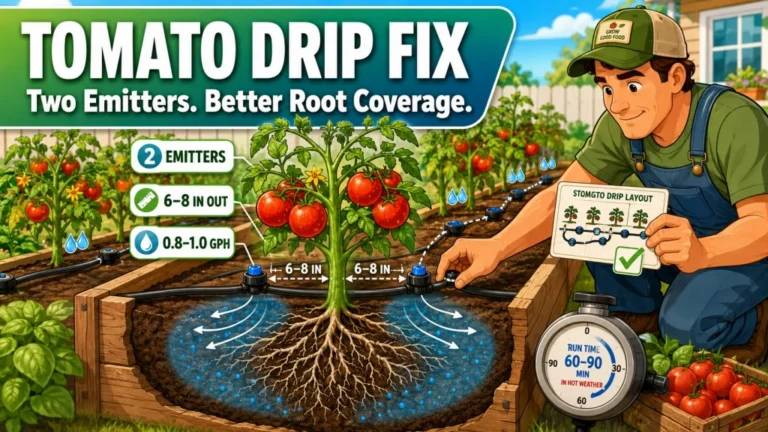
Tomatoes are among the highest-demand common raised bed vegetables. A single large plant in peak summer can use one to two gallons per day under full sun. A bed with four tomato plants needs sustained delivery at the root zone, not surface moisture, and the emitter flow rate has to match the run time you can realistically set on a hose-end timer. Kits with 0.5 GPH emitters can work for tomatoes, but the timer needs to run significantly longer than a kit with 1 GPH emitters to deliver the same volume. That difference compounds when soil drains fast, temperatures are high, or the beds have been amended with a lot of perlite. The specific emitter flow and run time comparison for tomato beds, including what I usually adjust first when a tomato bed shows mid-season stress, is in the section on drip irrigation for tomatoes in raised beds.
For gardeners who want a working system under fifty dollars, the comparison narrows to two kits that consistently deliver at that price point. Both cover one 4×8 bed, include a basic pressure regulator and filter, and are available at major retailers. The honest trade-off at this budget is adjustability: neither kit gives you much room to reroute lines or reposition emitters after the season starts. The breakdown of what to expect and where each kit runs short is in the section on raised bed drip kit under 50 dollars.
| Garden situation | Kit direction |
|---|---|
| 1 to 2 beds, mixed vegetables | DIG ML50 or Rain Bird GARDENKIT depending on bed size and crop demand |
| 1 to 2 beds, budget under $50 | Entry-level kit; expect limited adjustability |
| 3 or more beds | Mainline-based system: DripWorks kit or DIY build |
| Tomatoes as primary crop | 1 GPH emitters or higher, flow rate matters more than brand |
| Agricultural-grade durability needed | Bootstrap Farmer components over consumer kits |
| 4 or more beds, cost-conscious | DIY build from individual components |
This table is a starting point, not a final answer. The sections below go deeper on each situation, and the dedicated reviews cover the specific specs and field behavior for each option.
When Box Store Kits Are Not Enough
DIG and Rain Bird cover most gardeners with one or two beds. For anyone who has tried the standard consumer kits and found them limiting, either because the fittings failed early, the coverage was inconsistent at scale, or the layout could not be adjusted without replacing major components, two other options come up consistently among raised bed gardeners who have been through more than one season.
Bootstrap Farmer is an agricultural supplier whose drip tape and fittings are used in small market gardens and serious home setups. Their components are not sold as a one-box consumer kit. You build the system from individual fittings, drip tape, and mainline, which takes more planning upfront. The result holds up better under repeated seasonal use, allows precise layout for any bed configuration, and can be repaired or expanded without replacing anything other than the worn component. The trade-off is that there is no single “Bootstrap Farmer raised bed kit” to install in an afternoon. Use the dedicated review for Bootstrap Farmer raised bed drip kit for the full component breakdown and setup observations.
DripWorks is an irrigation-only retailer that appears in almost every raised bed drip search result, but independent field-style reviews are harder to find. They sell both packaged kits for one to two beds and individual components for larger builds. Their kits are designed for vegetable and raised bed applications rather than adapted from landscape irrigation, which changes how the pressure regulation and emitter spacing are configured. For a closer look at how those kits perform in a home raised bed garden compared to box store options, use the DripWorks raised bed irrigation kit review.

This large-scale kit covers up to 18 standard 4 by 8 foot raised beds and includes 250 feet of three-quarter inch mainline tubing, 200 feet of quarter-inch micro tubing, 100 feet of soaker dripline with 12-inch emitter spacing, and over 240 fittings and plugs. A three-quarter inch filter, 30 psi pressure regulator, punch and cut tool, and Easy-Loc mainline connectors are also included for a fully self-contained setup. All components are UV-resistant and rated for both above-ground and underground installation.
Check On AmazonIf you click this link and buy, we earn a commission at no additional cost to you.
DIY vs Kit: Where the Cost Math Gets Interesting
The DIY vs kit question comes up most often when a gardener with three or more beds prices out multiple consumer kits and finds the total cost higher than expected. That calculation is usually correct. Two consumer kits, each with its own pressure regulator, its own filter, and its own mainline section, typically cost more than a single DIY build from 1/2-inch mainline, 1/4-inch emitter tubing, and individual fittings bought separately.
The trade-off is setup time. A consumer kit unpacks and installs in an afternoon with no parts list required. A DIY build needs a layout plan, tubing length calculations, and more connections to make. For one or two beds, the kit is almost always the right choice. For four or more beds, the DIY route typically wins on cost and long-term adjustability. The deeper review covers where the cost lines cross and which situations genuinely favor one over the other: DIY vs kit for raised bed drip irrigation.
Adding a Timer: The Component That Changes the Value Equation
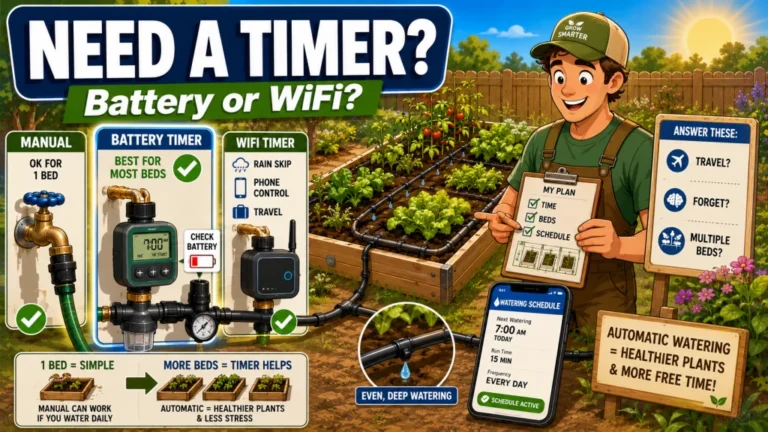
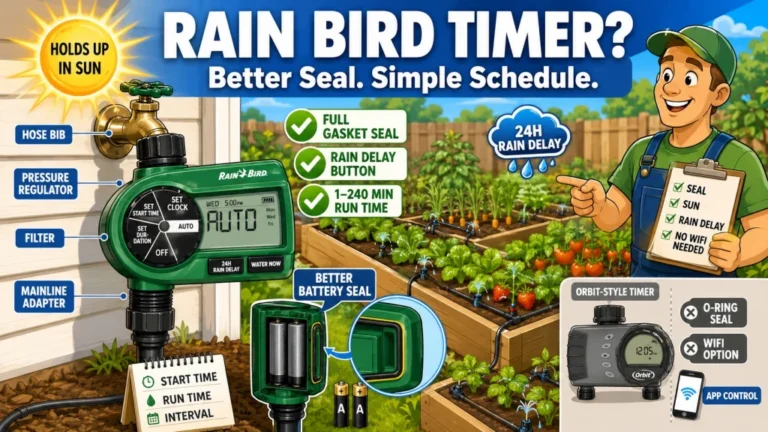
None of the kits discussed in this comparison include a timer. A hose-end timer is what takes a drip system from something you still have to turn on and remember to turn off, to something that runs on a schedule without you. For most raised bed vegetable gardeners, the timer is also where compatibility issues surface: low-flow emitter setups can cause timer startup pressure spikes, some timers do not work well with pressure regulators below a certain inlet pressure, and battery-powered timers behave differently than tap-powered units when water pressure varies.
The comparison of timer types for raised bed drip systems, including which configurations pair well with the kits covered on this page and which combinations cause problems, is in the section on drip irrigation timer for raised beds.

This robust hose-end timer works with sprinklers, drip irrigation, and soaker hoses, offering simple automatic programming with full 7 day scheduling for worry-free watering. An extra-large dial and readout screen make setup and schedule review easy, while one-touch buttons allow quick cancellation, a rain delay of up to 96 hours, or manual watering on demand. The display also shows the next scheduled cycle and time remaining on the current one.
Check On AmazonIf you click this link and buy, we earn a commission at no additional cost to you.
Final Thoughts: Match the Kit to the Garden, Not the Review
DIG and Rain Bird cover most one- and two-bed setups well. DripWorks and Bootstrap Farmer make more sense at scale or when the consumer kit approach has already shown its limits. DIY outperforms kits on cost once the bed count is high enough to justify the planning time. The variable that matters most before any of that is bed count, followed by crop type.
If you know your bed count and crop mix, go directly to the comparison that fits using the table below. If you are still working through whether a kit is worth it at all, the system type comparison and the wrong-choice filter above are the right starting points.
Explore More Raised Bed Drip Kit Comparisons
Each section below covers one specific kit situation in detail. Find the one that matches your bed count, crop type, or budget and use it to make the actual purchase decision.
| Comparison | What it helps with |
|---|---|
| DIG ML50 raised bed drip kit | Full review of the DIG ML50 by bed size, emitter flow rate, and real install behavior |
| Rain Bird GARDENKIT raised bed setup | Where the Rain Bird GARDENKIT performs well and where it runs short compared to larger setups |
| drip kits for multiple raised beds | Which kit configurations handle three or more beds without pressure loss or dry spots |
| drip irrigation for tomatoes in raised beds | Emitter flow rate, run time, and layout decisions for beds with high-demand crops |
| raised bed drip kit under 50 dollars | What you get at the entry price point and what the trade-offs look like in practice |
| Bootstrap Farmer raised bed drip kit | Agricultural-grade components for gardeners who have outgrown consumer kit limits |
| DripWorks raised bed irrigation kit review | Independent field look at DripWorks kits versus box store alternatives for raised beds |
| DIY vs kit for raised bed drip irrigation | Where the cost math favors building from components over buying a packaged kit |
If you are working through the system type decision before comparing kits, the drip tape vs emitter line comparison is the right first stop. If you already know the system type and are ready to match a kit to your bed count and crop, use the table above to go directly to the relevant review.
FAQs
💧 What is the difference between DIG ML50 and Rain Bird GARDENKIT for raised beds?
The DIG ML50 uses adjustable emitters with a higher flow rate and covers a wider bed more reliably. The Rain Bird GARDENKIT is more compact, suited to smaller beds and lower-demand crops. In a 4×4 bed with herbs or lettuce, the Rain Bird installs cleanly. In a 4×8 bed with tomatoes, the DIG has more range. They are not on the same timer schedule if both are running from one hose bib, because the flow rates differ.
🛠️ Can I run three raised beds from one consumer drip kit?
Not well. Consumer kits like the DIG ML50 and Rain Bird GARDENKIT are designed for one to two beds. Adding a third bed through extensions typically drops pressure enough that the far emitters deliver noticeably less water than the near ones. At three or more beds, a mainline-based system with one shared pressure regulator and filter handles the load more reliably than chained consumer kits.
🍅 Which drip kit works best for tomatoes in raised beds?
Tomatoes need consistent delivery at the root zone and benefit from 1 GPH emitters rather than 0.5 GPH, because lower flow rates require significantly longer run times to deliver the same volume. The specific kit matters less than the emitter flow rate and the timer schedule. Any kit that allows emitter placement directly at the plant base and runs at 1 GPH or higher handles tomatoes better than a kit with fixed low-flow emitters.
💸 Is a DIY drip system cheaper than buying a kit for raised beds?
It depends on bed count. For one or two beds, a kit is almost always cheaper and faster once you factor in the time to plan and source individual components. For four or more beds, the DIY route typically costs less because you are not buying duplicate pressure regulators, filters, and mainline sections with every additional kit. The break-even point is usually around three beds.
🌱 Does DripWorks make good kits for small raised bed gardens?
DripWorks designs their kits specifically for vegetable and raised bed use rather than adapting from landscape irrigation, which changes how pressure regulation and emitter spacing are configured. Whether that translates to better performance for a small home garden compared to box store kits at the same price point is covered in the dedicated review. The brand ranks heavily in search results, but independent field comparisons are rare.
⏱️ Which drip kits work with a hose-end timer for raised beds?
Most standard hose-end timers work with DIG, Rain Bird, DripWorks, and Bootstrap Farmer setups, as long as the timer is installed before the pressure regulator, not after it. Low-flow emitter setups can cause pressure spike issues with some timers at startup. The timer compatibility comparison, including which configurations cause problems, is in the dedicated timer section for raised bed drip systems.